History & story.
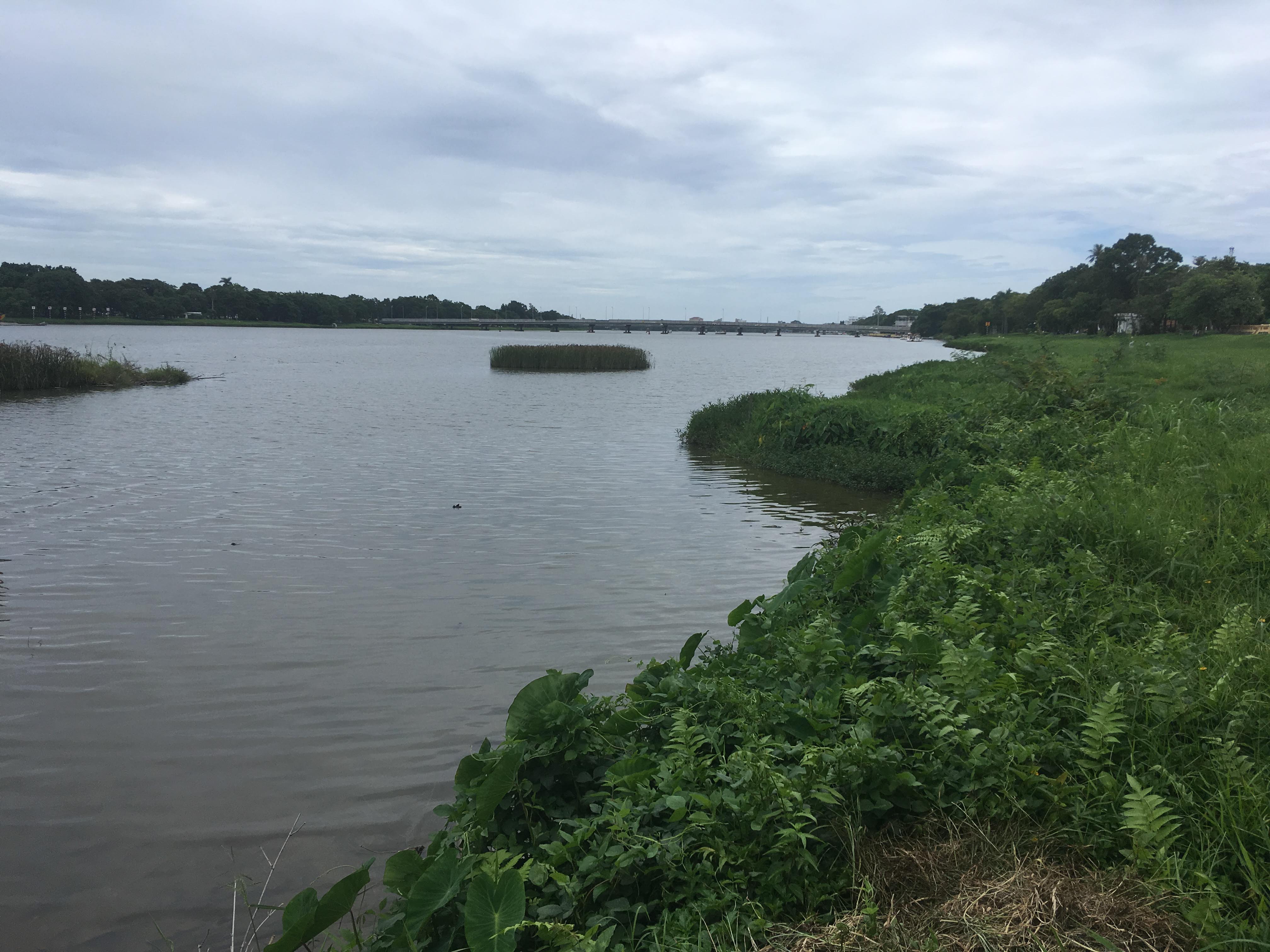
The Perfume River — flowing through the heart of Hue city before emptying into Tam Giang Lagoon and the East Sea — is one of Vietnam's most celebrated rivers not for its size or economic importance but for its poetic beauty and profound cultural significance bound to the ancient capital and the Hue spirit across centuries. The name 'Huong Giang' — Fragrant River — derives from the river water's special scent in summer, said to come from flowing through the flowering forests of the Truong Son mountains before reaching the lowlands. The Perfume River runs about 80 kilometers from its source to the sea, passing through varied landscapes: dense mountain forest, ancient riverside villages with lush gardens, through central Hue with both banks developed as parks and promenades, before widening into the vast Tam Giang Lagoon. No poet has written about Hue without invoking the Perfume River — from Nguyen Du to To Huu, from Han Mac Tu to Trinh Cong Son, this river has been an inexhaustible source of Vietnamese literary and musical inspiration.
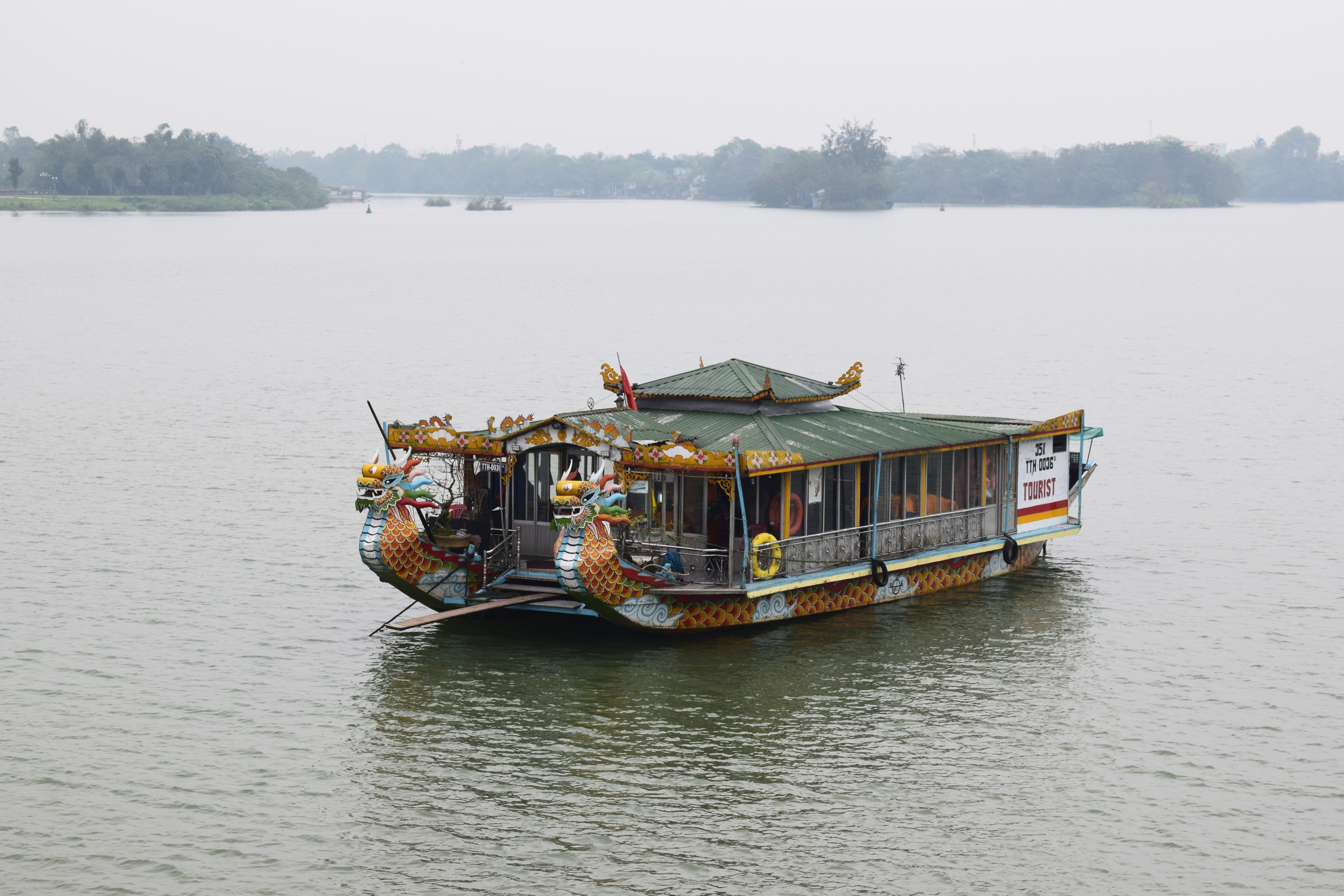
Truong Tien Bridge — the six-span steel bridge crossing the Perfume River in the city center, built by the French in 1899 and named for a mint workshop nearby — is the inseparable symbol of the Perfume River and Hue. The mai nhi boat song, a call-and-response rowing melody characteristic of Hue, once rang out from cargo and fishing boats along the Perfume River — today preserved and performed on dragon boats for tourists as an unmissable intangible cultural experience. Both banks of the Perfume River through the city center serve as gathering places for Hue residents in early morning for exercise, fishing, and riverside contemplation — a peaceful daily rhythm that defines this city's particular atmosphere. On moonlit nights and during the Hue Festival, the river surface is illuminated by thousands of floating flower lanterns — a magical spectacle imprinted on the memory of all who have witnessed it. The northern bank along Kim Long Road — with its old French-colonial villas half-hidden in lush gardens — reveals a different face of the river: aristocratic, quiet, and more ancient than the commercial quarter opposite.
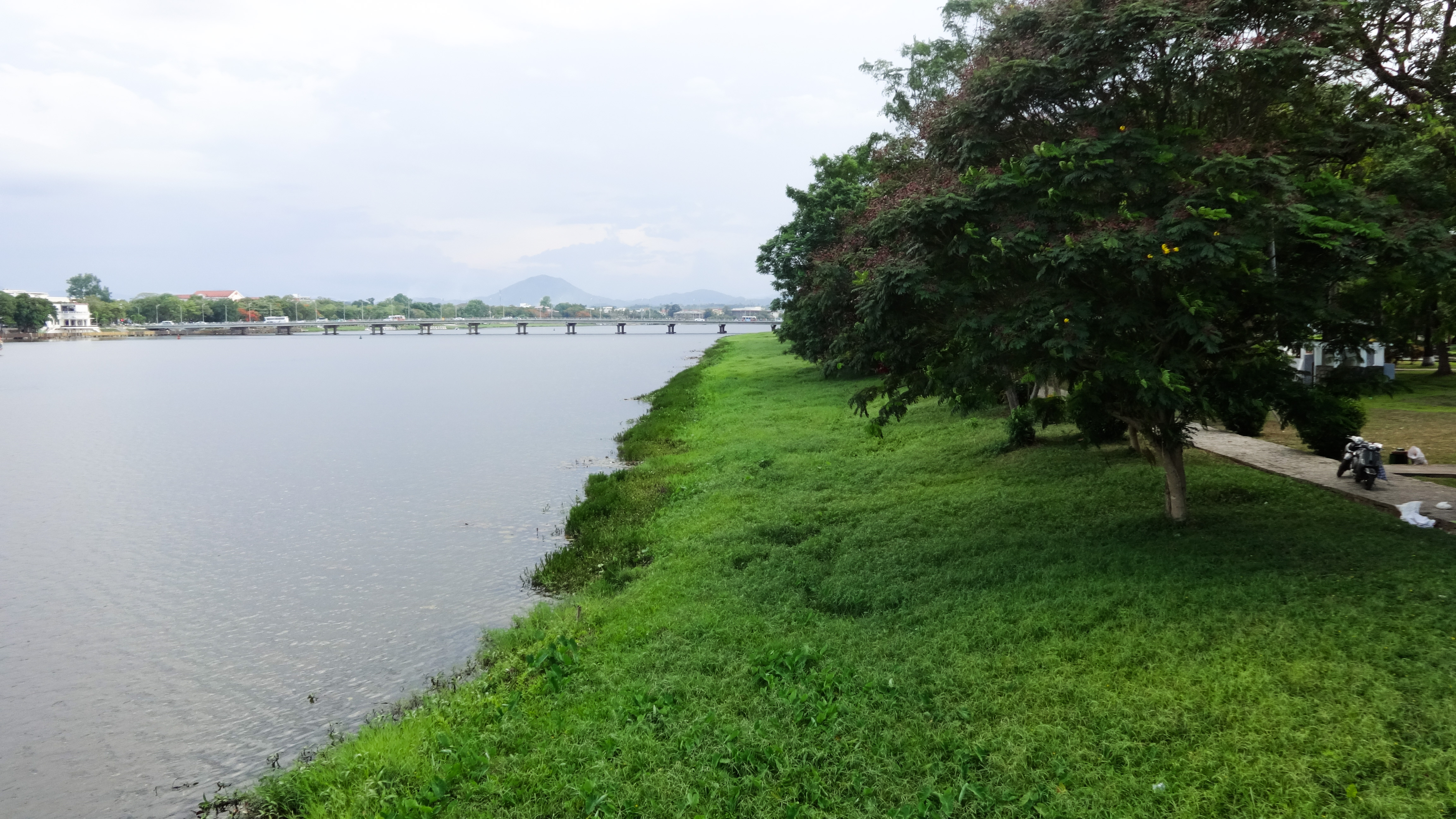
Scholar Hoang Phu Ngoc Tuong wrote in his celebrated essay 'Who Named the Perfume River?' that the river is 'a beautiful girl sleeping dreamily in the wildflower fields of Chau Hoa' before awakening and becoming 'a free-spirited and untamed Gypsy girl' on its course through mountain forest — a metaphor that has become the most widely cited understanding of the river's multidimensional character. The Perfume River is the primary landscape axis of the Hue Heritage Complex — Thien Mu Pagoda, the Imperial Citadel, the royal tombs, and the ancient villages of Kim Long and Vy Da are all connected to each other through the river like beads on a pearl necklace. From Vong Canh Hill to the west, one can see the full meander of the Perfume River with Ngu Binh Mountain behind — a panorama photographers and painters consider the finest view in all of Hue. Hue cannot be understood without time spent beside the Perfume River — a dragon boat at dawn, an afternoon of riverside fishing, or simply sitting with coffee watching the water flow — all are essential moments for feeling the soul of this heritage city.
The Perfume River is not merely landscape — it is a living ecosystem. Perfume River fish, especially the local ro freshwater fish and tom chua fermented shrimp unique to this stretch of water, are essential ingredients of Hue cuisine. Tam Giang Lagoon — where the Perfume River empties into after passing the city — is the largest brackish-water lagoon in Southeast Asia at 22,000 hectares, home to hundreds of aquatic species and the livelihood of thousands of fisherfolk. From the city center, traveling 15 kilometers upstream leads to the Truong Son and Nhi Ho waterfalls — little-known trekking destinations with scenery as wild and beautiful as the Central Highlands. The Perfume River is not merely heritage — it is a living, breathing organism that changes daily, and each generation of Hue people finds their own meaning in its eternal flow.
The river hesitates, the river does not flow / The river flows into the heart and Hue runs deep.
Thu Bồn, nhà thơ Việt Nam
Highlights not to miss.
Experiencing ca Hue — Hue's centuries-old genre of intimate chamber music performed by candlelight aboard a dragon boat — is one of Vietnam's most distinctive cultural encounters. Musicians perform classical pieces such as Nam Ai and Nam Binh using dan tranh zithers, dan bau monochords, and wooden clappers, producing sounds at once graceful and sorrowfully beautiful. Unlike nha nhac royal court music (UNESCO-recognised since 2003), ca Hue is chamber repertoire composed for aristocratic and literary audiences rather than state ceremony.
The six-span steel arch bridge across the Perfume River, designed by Eiffel's firm and constructed in 1899–1900 in the slender colonial engineering style characteristic of French Indochina, is an inseparable symbol of Hue for generations. The bridge was rebuilt multiple times after wartime destruction — most recently after 1968 — yet always faithfully restored to its original six graceful arched spans. At night, when its LED lighting system casts multicoloured reflections across the water, Truong Tien Bridge becomes one of the most photographed and romantic scenes in all of Hue.
A dragon boat ride on the Perfume River is the finest way to see Hue from an entirely different perspective — heading 5 kilometers upstream to Thien Mu Pagoda, then continuing to Minh Mang and Tu Duc mausoleums along a single journey. The traditional red-and-gold boats with stylized dragon prows, low-set floor cushions, and paper lantern decoration create the defining river scene that no other part of Vietnam can replicate. The round-trip journey by water takes 3–4 hours and is the most efficient way to link multiple heritage sites in one continuous experience.
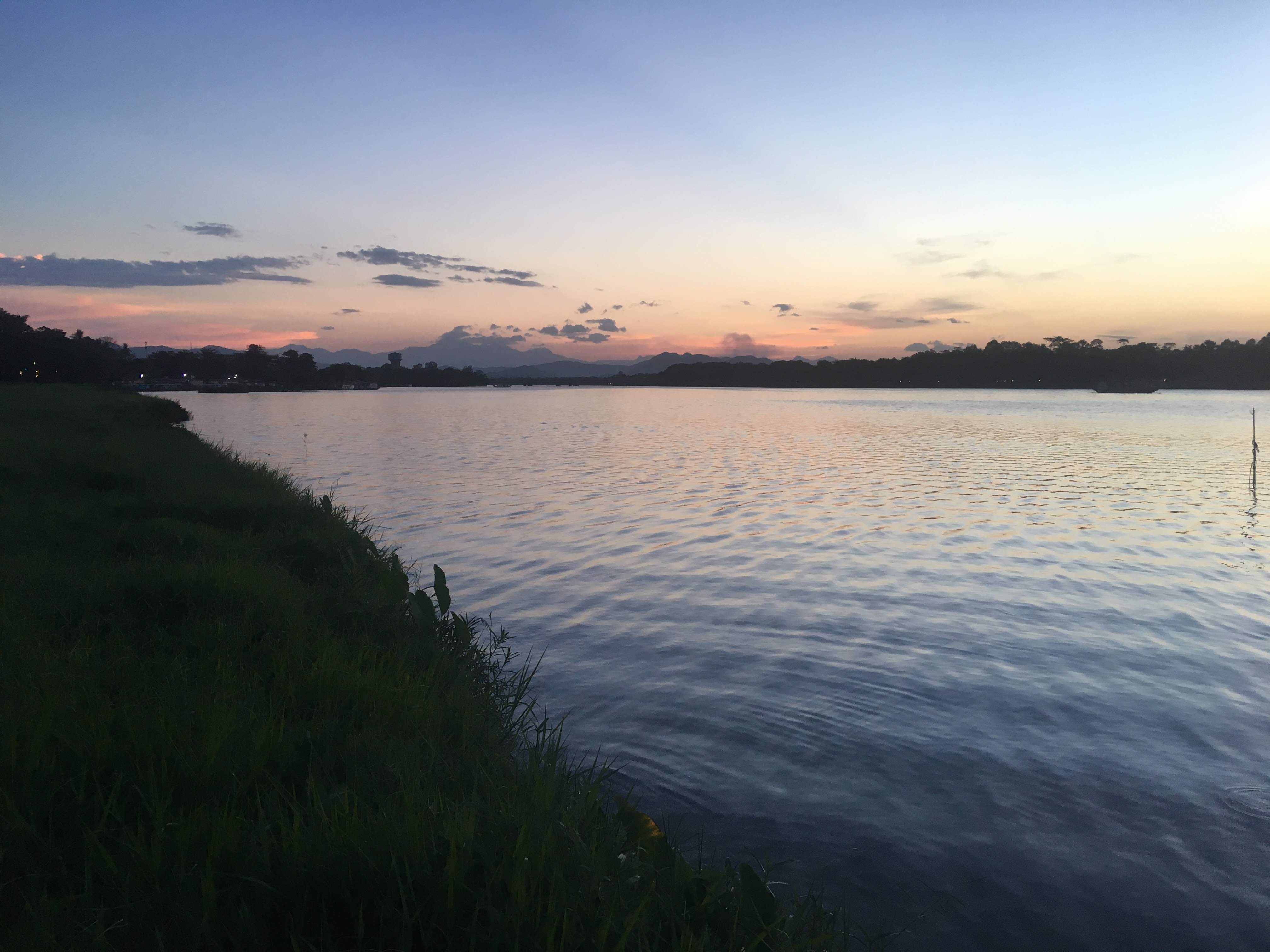
Vong Canh Hill on the western riverbank — about 3 km from central Hue via Kim Long Road — is the ideal elevated vantage point for watching the sun set over the Perfume River, especially in the dry season when the sky is clear and golden light stretches across the still water. From here, the full meander of the Perfume River, the distant Truong Tien Bridge, and Ngu Binh Mountain silhouetted against the pink sky compose a panorama that painters and photographers consider the finest view in all of Hue. The climb takes only 10–15 minutes on foot and is free — a spot every Hue local knows but few tourists discover.
On the full moon night of each lunar month, Hue residents release paper lanterns onto the Perfume River — a deeply romantic and spiritually resonant ritual that visitors who happen to be in town on the right night should not miss.
How to visit & get there.
Getting to the River and Boat Landings
The Perfume River runs directly through Hue's city centre — accessible from anywhere in town. The main boat landing near Truong Tien Bridge is the departure point for dragon boat tours: daytime cruises (2–3 hours stopping at Thien Mu Pagoda and royal mausoleums) and evening ca Hue music cruises (approximately 2 hours, VND 200,000 per person). Walking along the southern riverbank on Le Loi and Tran Hung Dao streets in the morning or at dusk is free — locals exercise, riverside cafes bustle, and light on the water is extraordinary.
Ca Hue Evenings and Full Moon Nights
For the full ca Hue experience, book at least one day ahead through your hotel or a local operator. Tours typically depart around 20:00–20:30 and last two hours. If you are in Hue on the 15th day of the lunar month (full moon night), residents release thousands of paper lanterns onto the river — a spectacle found nowhere else in Vietnam. Combine a daytime river cruise with visits to the royal mausoleums and Thien Mu Pagoda to make the most of the boat journey upstream.
Sources
- 1.Sông Hương — Dòng sông của lịch sử và thi ca
Vietnam Tourism · 2025-03-10
- 2.Sông Hương — Linh hồn xứ Huế
VnExpress · 2025-03-18
- 3.Nha Nhac — Vietnamese Court Music, UNESCO Intangible Heritage
UNESCO · 2025-03-10