History & meaning.
Thánh Mẫu Thiên Y A Na is one of Vietnam's deities with the deepest history of cultural exchange. The Champa civilisation — which flourished in central Vietnam for millennia — worshipped her as Poh Nagar: the Mother Goddess of land, harvest, and fertility. As Vietnamese migrants moved south, they did not reject this tradition but absorbed and integrated it: she was Vietnamised as Thiên Y A Na, layered with new legends from Vietnam's own Mother Goddess (Đạo Mẫu) tradition. Hue Nam Palace is the physical embodiment of that remarkable cultural synthesis: a shrine on Ngoc Tran Mountain rising from the Huong River, where both Cham and Viet worshippers across centuries recognised their own divine presence. This is one of very few places in Southeast Asia where two civilisations did not erase each other but merged within a single sacred space — making Hue Nam Palace not merely a religious heritage site but a living witness to the history of encounter.
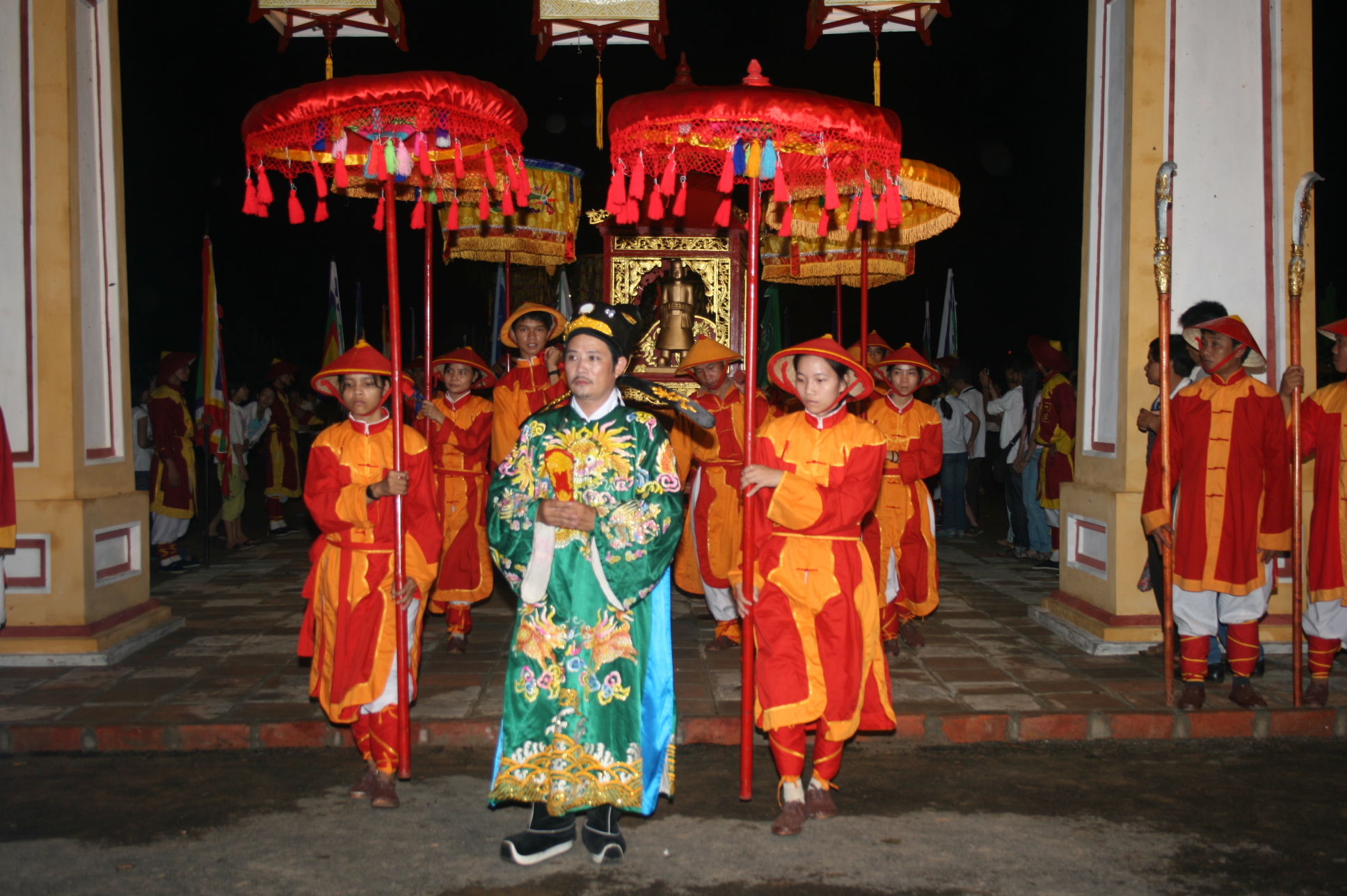
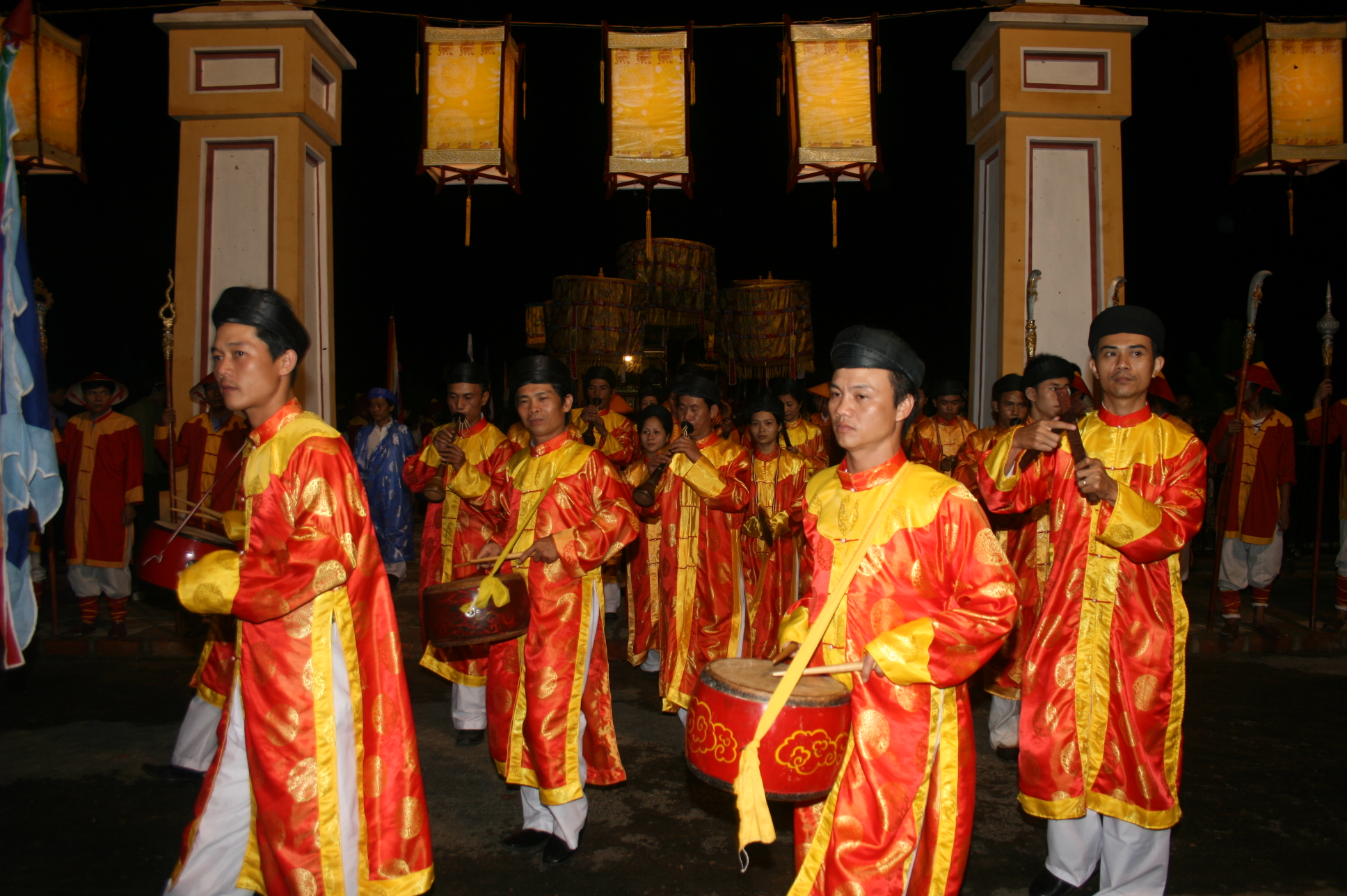
The ritual component of the Hue Nam Palace Festival follows strict ceremonial protocols, with the ritual committee dressed in traditional ceremonial robes. Before the main ceremony, mediums (thầy đồng and cô đồng) perform the hầu đồng trance ritual — a spiritual practice central to Vietnam's Mother Goddess tradition. During hầu đồng, the mediums are believed to become vessels through which the deities deliver messages to their devotees. The ritual combines chầu văn music — a captivating ceremonial genre with melodic draw and poetic lyrics — with brilliantly coloured costumes that change with each spirit incarnation. The river procession provides the festival's most iconic image: hundreds of sumptuously decorated boats depart from Toa Kham wharf and move in solemn formation upstream, carrying the palanquin of the Mother Goddess back to her palace. Crowds line both riverbanks beyond counting.
Architecturally, Hue Nam Palace represents a refined synthesis of Nguyen imperial style and folk religious tradition. Emperor Dong Khanh — considered to have had an especially deep devotion to the Mother Goddess — commissioned major restoration and expansion of the palace in the late 19th century, bestowed imperial honours on Thiên Y A Na, and personally attended ceremonies there. This royal patronage elevated Hue Nam Palace from a local pilgrimage point to a court-recognised heritage site. Inside the palace are multiple altar chambers with finely carved deity statues, precious ceremonial objects, and gilded Chinese-character inscriptions on hanging plaques. Incense smoke rises continuously through festival days — not because anyone maintains it artificially, but because the stream of pilgrims never ceases.
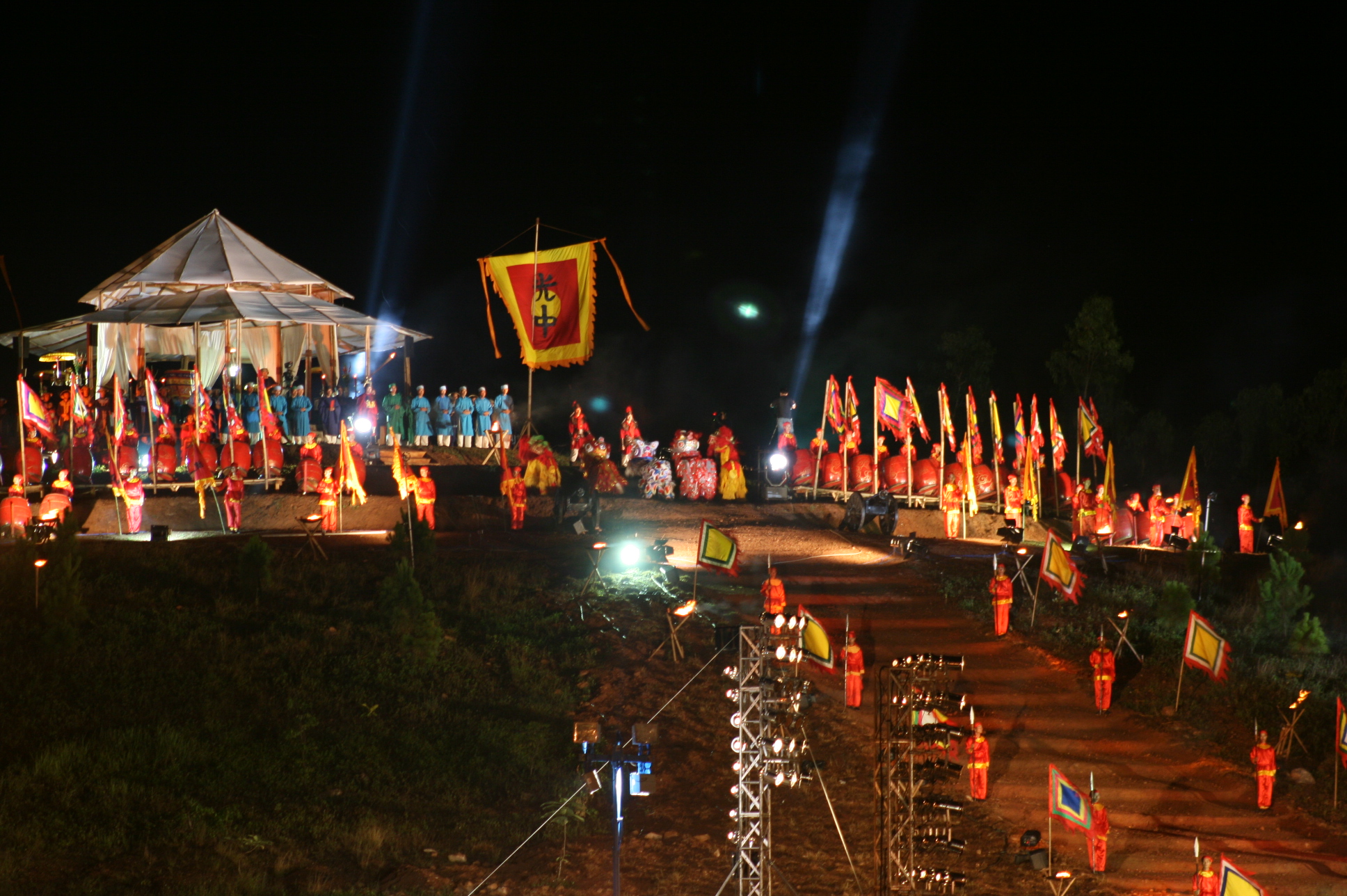
Arriving at Hue Nam Palace during festival season means entering a world of emotion and sensation entirely unlike ordinary life. Heavy, sweet incense mingles with the river smell rising from the Huong below the mountain slope. Chầu văn music — prayer-song that rises and falls in urgent melody — drifts out from the inner chambers on river breezes. The colours of the mediums' ceremonial robes during hầu đồng — bright scarlet, blazing gold, jade green — contrast intensely against grey stone and surrounding forest. Looking down from the palace terrace, the entire bend of the Huong River unfolds like an ink-wash painting: moored boats rising and falling gently, lanterns swaying in the wind, and in the far distance the deep blue shadow of upstream mountains. In those moments, you understand why this place was chosen as a sacred site thousands of years ago.
"Thien Y A Na is a mother who does not distinguish bloodlines — She belongs to all who call upon Her from either side of the river."
Truyền miệng dân gian vùng sông Hương / Oral tradition of the Huong River communities
Highlights not to miss.
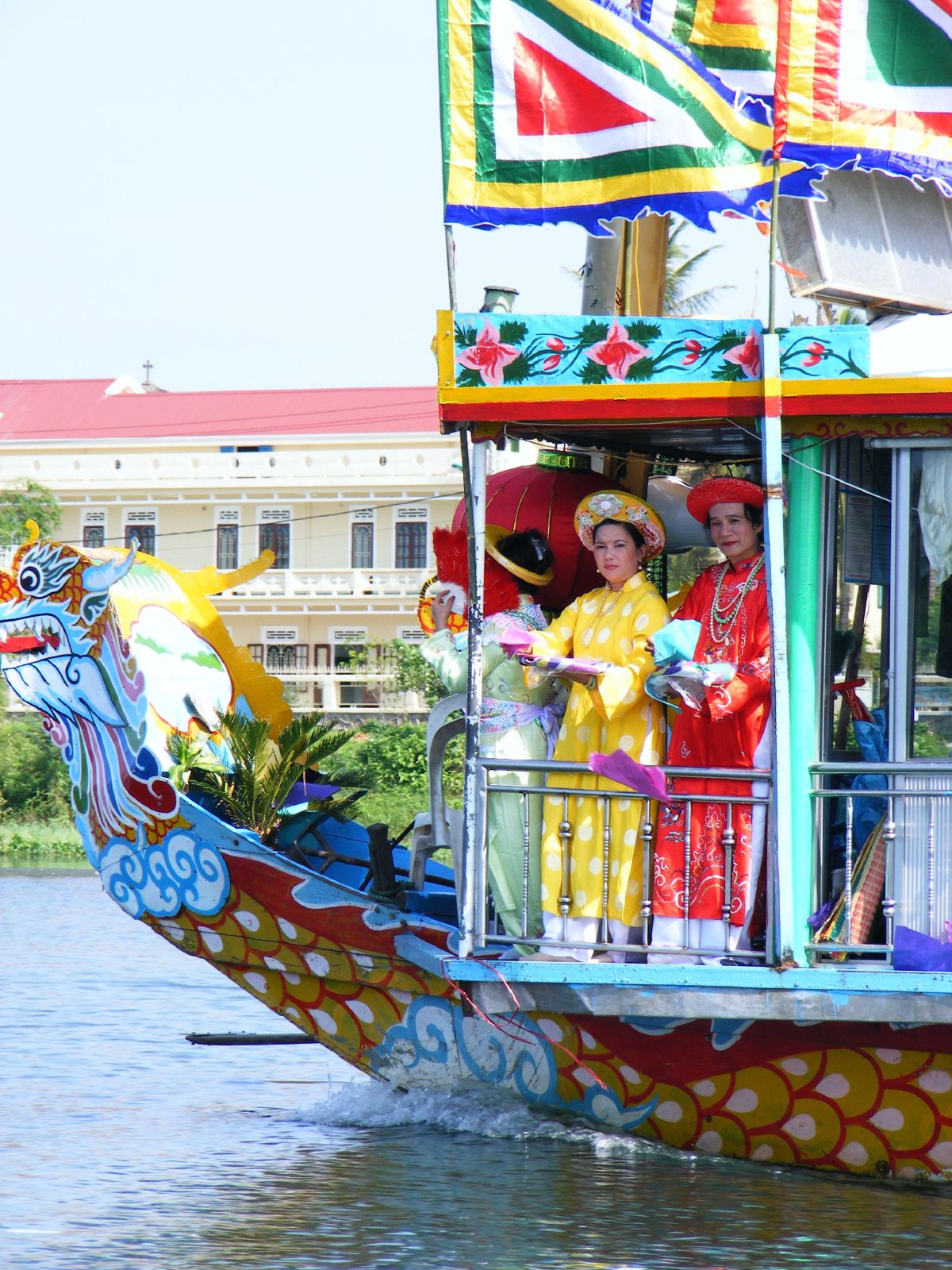
The ceremonial flotilla departs from Toa Kham wharf in early morning mist — hundreds of boats adorned with lanterns and red-gold ceremonial banners moving upstream on the Huong in solemn silence. The river surface mirrors the lights through morning haze, creating a surreal image rarely witnessed in ordinary life. This is the festival's most unforgettable visual moment. Visitors can hire private boats to follow the procession at close range.
Hầu đồng is the spirit possession ritual in which mediums (thầy đồng / cô đồng) enter trance states, believed to serve as conduits through which deities communicate with the living world. Each possession segment (giá đồng) has its own distinctive costume, movement vocabulary, and chầu văn music score. At Hue Nam Palace, the ritual bears distinct Hue characteristics in its protocols and ceremonial dress. Hầu đồng was recognised by UNESCO as Intangible Cultural Heritage of Humanity in 2016.
Nowhere in Vietnam is the Viet-Cham cultural synthesis more clearly expressed than in the veneration of Thánh Mẫu Thiên Y A Na. She is simultaneously Poh Nagar — the Cham Mother of the Country — and Thiên Y A Na within the Vietnamese Four Palaces (Tứ Phủ) spiritual system. Hue Nam Palace is the only place in Vietnam where both Cham devotees and Vietnamese Mother Goddess practitioners make pilgrimage to worship a shared deity. This gives the festival a depth of history and human meaning that is genuinely rare.
The spring ceremony (lunar 3rd month) is typically larger in scale and more elaborate than the autumn ceremony, with more ceremonial boats and greater ritual pomp. April weather in Hue is also more comfortable than August — less rain and not yet at peak summer heat. If you can only attend once, prioritise the spring ceremony.
How to attend & get there.
Getting There by River — The Best Way
The most beautiful and traditional approach to Hue Nam Palace is by boat from Toa Kham wharf (near Bach Ho Bridge in central Hue), a 30-minute upstream journey on the Huong River. Passenger boats operate regularly at 100,000–150,000 VND per person. During festival season, arrive at the wharf early as boats fill quickly. It is also possible to reach the palace by motorbike along the riverside road, but you lose most of the river experience.
Conduct and Participation
Dress modestly — this is a seriously sacred space. Avoid shorts or short skirts when entering the inner shrine. Ask permission before photographing mediums during hầu đồng rituals — some practitioners do not wish to be photographed during trance states. Respect the space of those actively performing ceremonies and do not stand blocking procession routes. Bring incense to offer if you wish to participate in the devotional aspect — incense is sold immediately at the palace entrance gate.
Sources
- 1.Lễ hội điện Huệ Nam — thế giới tâm linh của cố đô Huế
Báo Thừa Thiên Huế · 2026-06-20
- 2.Lễ hội điện Huệ Nam — không gian sinh hoạt văn hóa đặc trưng ở cố đô Huế
VietnamPlus · 2026-06-20