History & meaning.
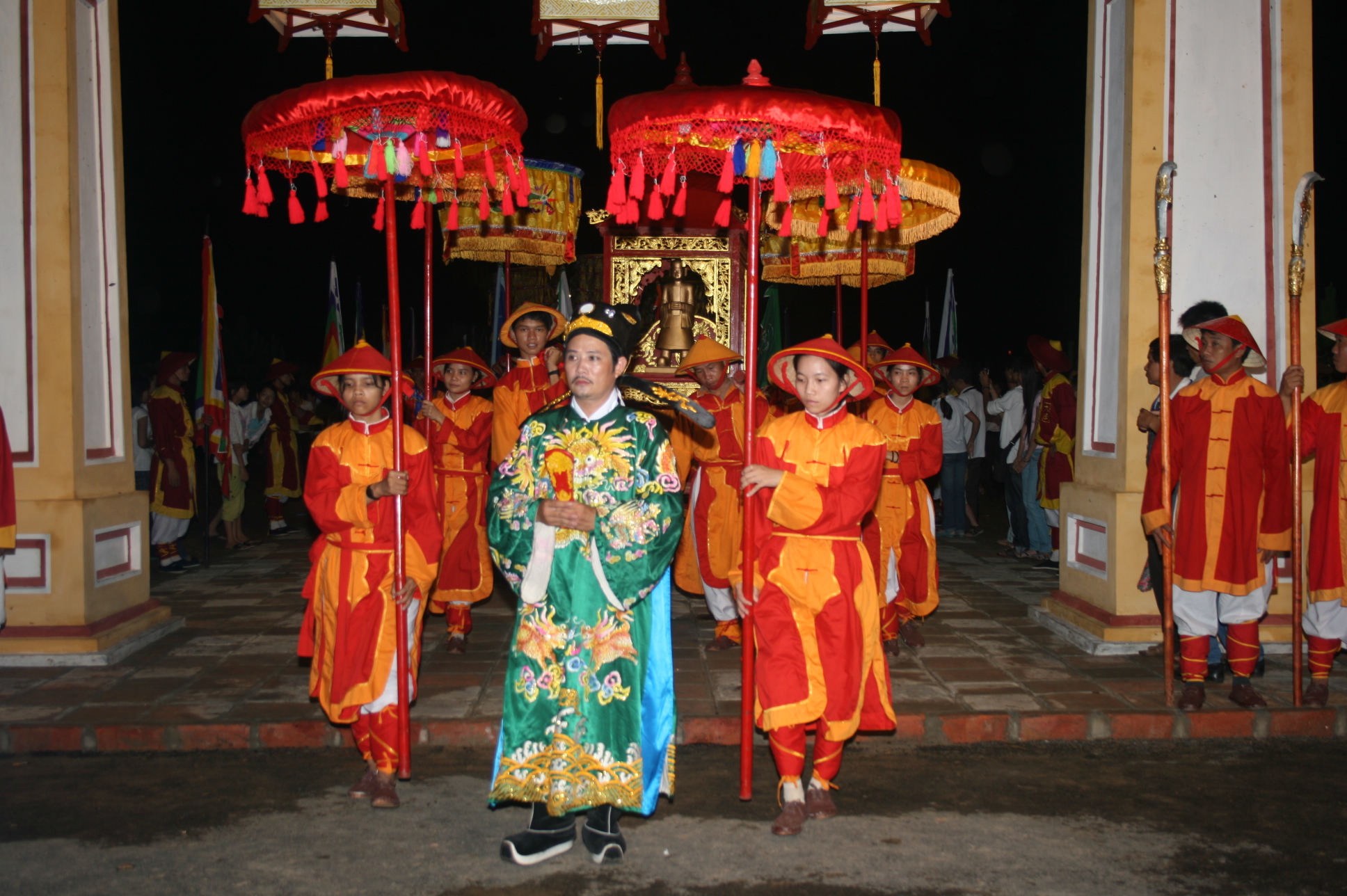
The Hue Festival emerged from a historical paradox: the ancient capital of Vietnam's final royal dynasty is simultaneously the country's richest repository of imperial heritage and one of its most deeply war-scarred landscapes. When the festival was founded in 2000, organisers chose not to paper over that contradiction, but to draw power from it. The Imperial Citadel — where cannon once roared and palace towers burned — was lit again for the first time by the lights of art. From a first edition featuring a handful of European troupes, the Hue Festival has grown to gather artists from more than 50 nations, becoming central Vietnam's largest international cultural event. That two-decade persistence has built a brand: Hue is not merely a heritage site — Hue is an arts destination.
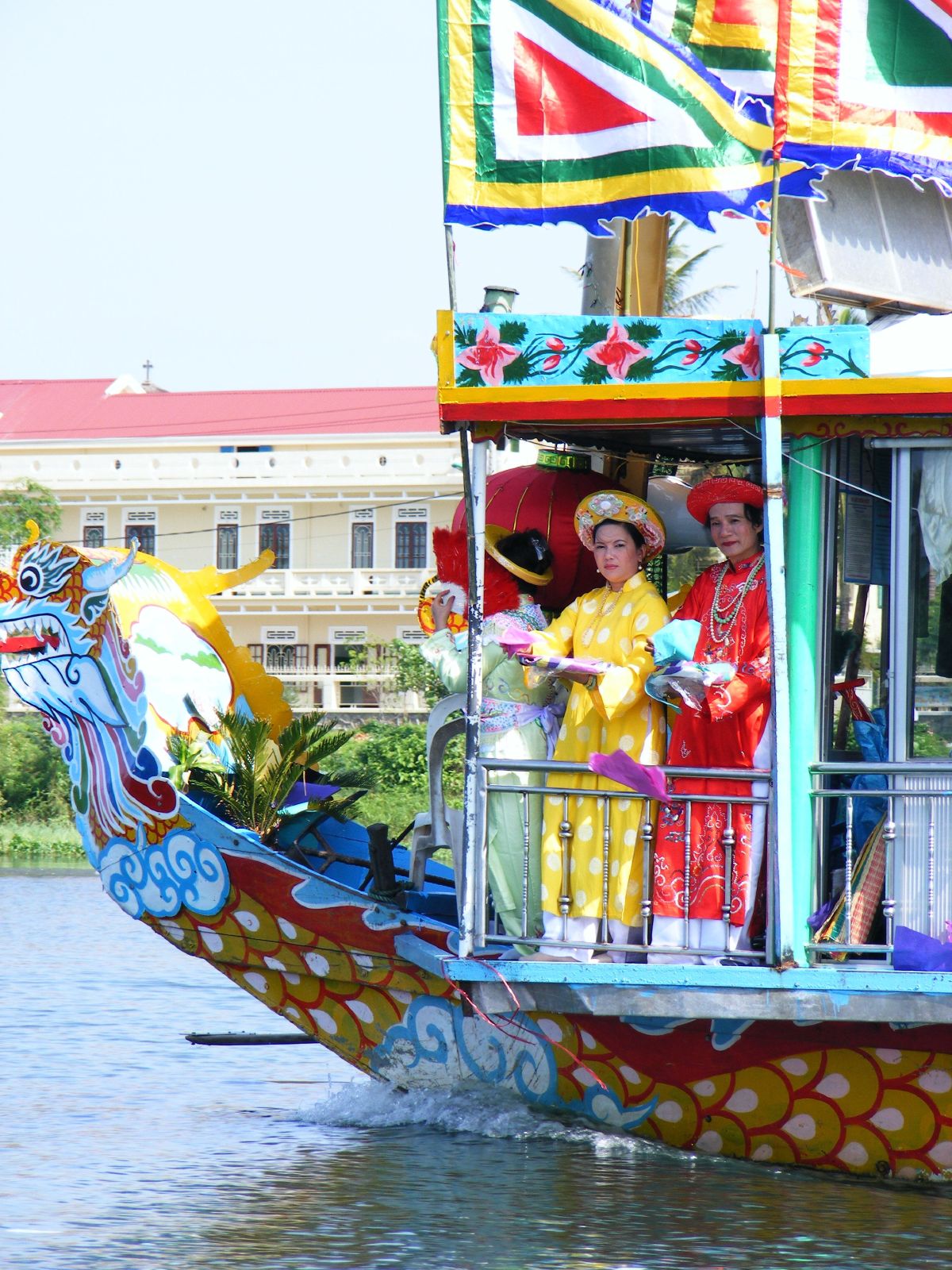
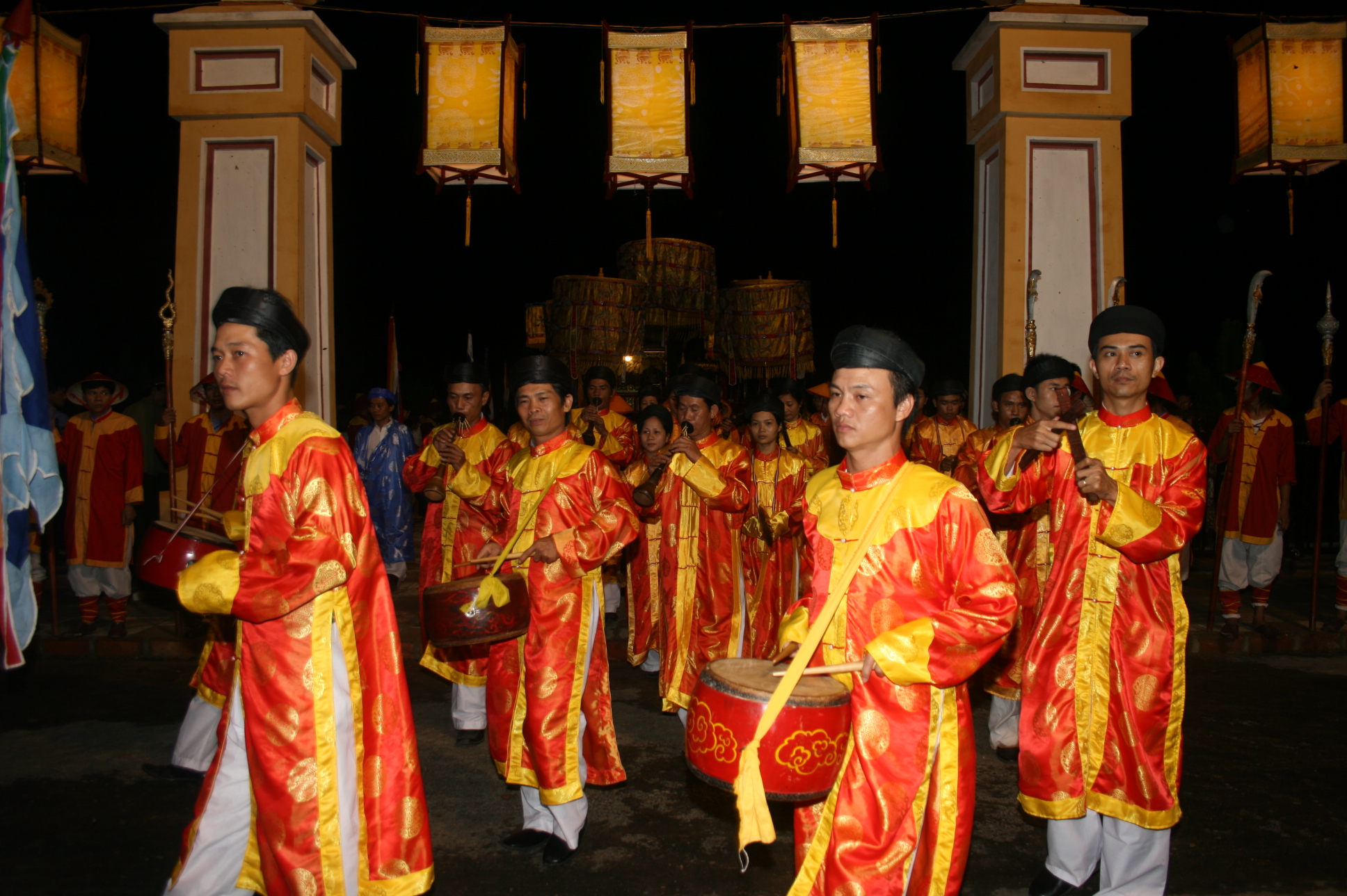
What sets the Hue Festival apart is how it uses heritage space as a character, not merely a backdrop. The Imperial Citadel is not a stage erected for the occasion — it is a thousand-year-old structure actively participating in the performance. Lights trained on the tilting roof tiles of the Noon Gate do not merely beautify; they narrate: this is where emperors processed, where armies marched, where generations of Hue citizens watched dynasties pass. Royal court music (nhã nhạc) — a UNESCO-protected tradition kept alive in Hue — sounds alongside Ethiopian jazz and Korean contemporary dance on the same evening, generating moments of cross-cultural dialogue rare anywhere in the world. Events on the Huong River, with dragon boats and floating lanterns, extend from Truong Tien Bridge down toward the lagoon, turning the entire river into a corridor of light. The fusion of Eastern spirit and international openness is the Hue Festival's unreplicable signature.
The Hue Ao Dai Festival — launched within the Summer Festival in 2020 — has rapidly become its own symbol. This is not an indoor fashion show: it is a street procession that any person wearing ao dai is free to join. Thousands of women — secondary school students, housewives, artisans, businesswomen — merge into a flowing river of colour along Le Loi Street beside the river. Foreign visitors rent ao dai and fall into the procession as naturally as breathing. Hue-style ao dai carries its own distinctions — a higher collar, longer panels, more subdued colour palette than southern-style gowns — reflecting the imperial character and reserved elegance of the ancient capital. The festival has restored ao dai to everyday Hue life in a way no marketing campaign could have engineered.
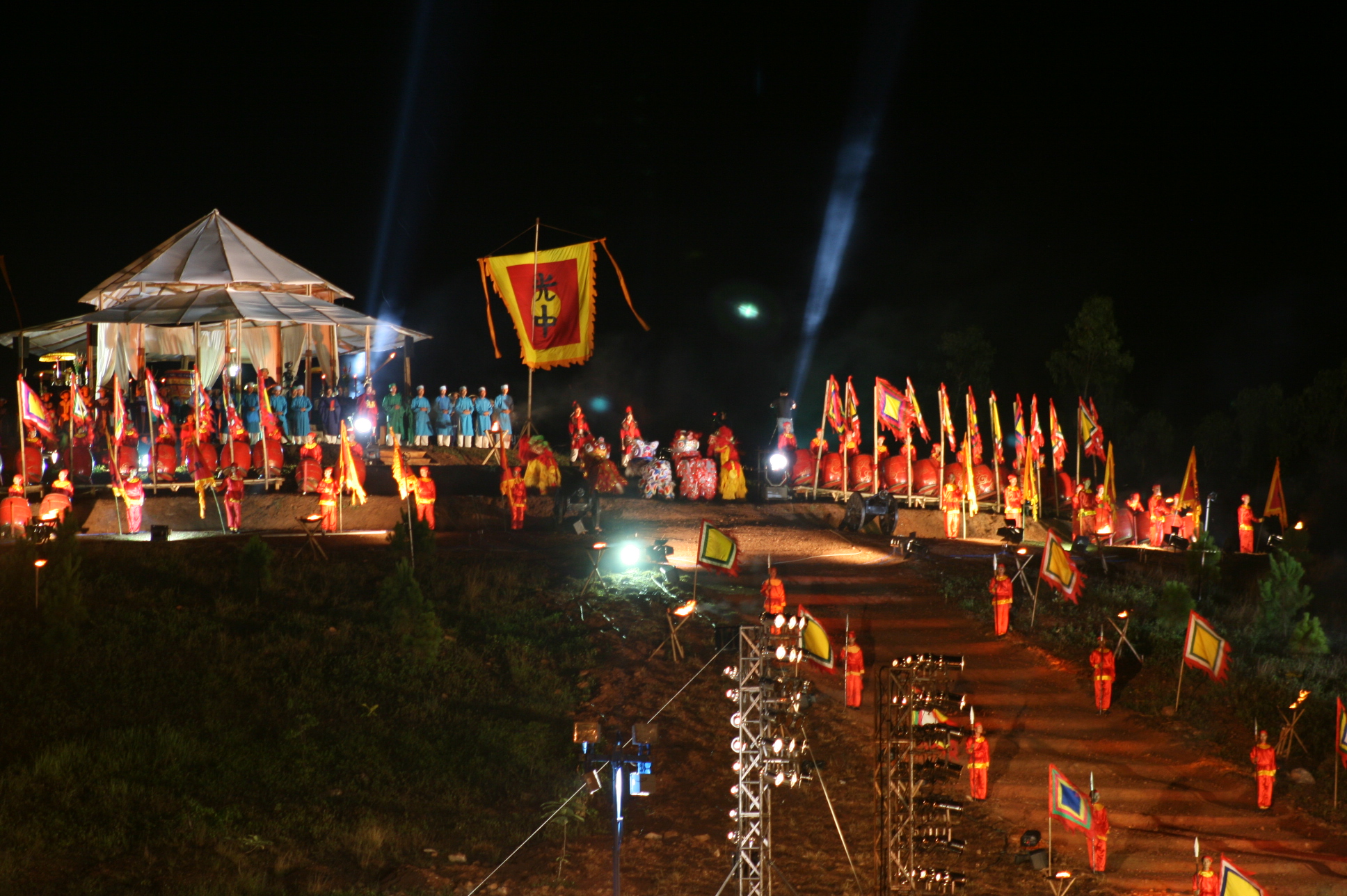
Attending the Hue Festival is a multi-sensory experience unlike any other festival in Vietnam. In the late afternoon, as golden light falls across the palace roof tiles and the shadows of flame trees stretch long across the Citadel's courtyards, the atmosphere becomes simultaneously gentle and electric. The scent of incense from shrines within the Forbidden City mingles with the fragrance of bun bo Hue and che dau xanh from food stalls lining the street. Music from multiple simultaneous performance stages creates a layered soundscape: somewhere the plucked notes of a dan tranh, somewhere else the pulse of afrobeat drums. As night falls, the Huong River mirrors thousands of lights from gliding dragon boats, and every bridge across the water becomes a light-art installation. In those moments, Hue is not an ancient capital — Hue is a city breathing, narrating, and fully alive.
"Hue is not a museum. Hue is a breathing, living organism."
Nguyễn Xuân Phúc, nguyên Thủ tướng Việt Nam, tại lễ khai mạc Festival Huế 2022
Highlights not to miss.
The festival's signature programme unfolds inside the Imperial Citadel after dark: thousands of lanterns, theatrical lighting, and video-mapping projections transform the palace compounds into an otherworldly space. Audiences walk freely through illuminated courtyards listening to royal court music and watching contemporary performances staged within the heritage itself. This is the only time each year the public experiences the Forbidden City at night in this format. Tickets routinely sell out weeks in advance — early booking is essential.
The Hue Ao Dai Festival is an open street procession — anyone in ao dai may join thousands of Hue women along the Huong River bank. Traditional Hue-style ao dai has its own character: high collar, long panels, and subdued colour palette reflecting imperial heritage. Organisers typically provide on-site ao dai rental services for foreign visitors wishing to participate. This is one of the most photogenic experiences in central Vietnam.
The Hue Festival gathers performing troupes from dozens of countries alongside nhã nhạc — the UNESCO-inscribed royal court music tradition preserved in Hue. Evening performances on dragon boats on the Huong River create the festival's defining image: lights reflected on the water's surface, music carrying across the river. Many outdoor programmes along the riverbank and throughout the old quarter are completely free, spreading the festival atmosphere across the entire city.
The best viewing spots along the Huong River for dragon boat and riverside performances are typically claimed 2–3 hours in advance. Bring a blanket and snacks, arrive early, and turn the wait into a riverside picnic — that, too, is part of the festival experience.
How to attend & get there.
Planning and Tickets
Book 'Enchanted Imperial Palace' tickets at least 3–4 weeks in advance — this is always the first event to sell out. Check the detailed schedule on the official Festival Hue website (festivalHue.org.vn) as each season has its own calendar. Many outdoor events along the Huong River and in the old quarter are completely free — no ticket needed to absorb the festival atmosphere.
Getting Around and Accommodation
Hue is a compact city — renting a bicycle or motorbike is the most convenient way to move between the Imperial Citadel, the riverside, and scattered performance venues. Book accommodation at least 2 months ahead during festival season — riverfront hotels in particular fill up extremely fast. Combine festival evenings with morning visits to the royal mausoleums on the city's outskirts (Tu Duc, Minh Mang).
What to Wear and Bring
Wear ao dai if you can — you will be welcomed more warmly and your experience of the festival will feel more immersive. Bring a hand fan and a light rain layer as April–June in Hue can be intensely hot by day but prone to sudden evening showers.
Sources
- 1.Festival Huế 2024: Những dấu ấn đặc biệt
Báo Thừa Thiên Huế · 2026-06-20
- 2.Festival Huế 2026: chuỗi hoạt động đặc sắc trong lễ hội mùa hạ
VietnamPlus · 2026-06-20