History & meaning.
The Nam Giao Esplanade was built in 1806 under the order of Emperor Gia Long, founder of the Nguyen dynasty, as a proclamation of the new dynasty's political legitimacy. This was not simply a religious structure: the Nam Giao ceremony was the highest political-spiritual act an East Asian emperor could perform. Only kingdoms that considered themselves independent empires — not vassal states — had the right to conduct heaven-worship rites. By constructing the Esplanade, Gia Long and the Nguyen emperors declared: Vietnam is an empire, not a dependency. The site was chosen through feng shui: the space must open southward (the direction of Heaven in East Asian cosmology), with mountains shielding the north and water flowing to the east. The entire area was planted with pines and large trees to create an atmosphere of solemn majesty — those ancient pines still shade the esplanade today.
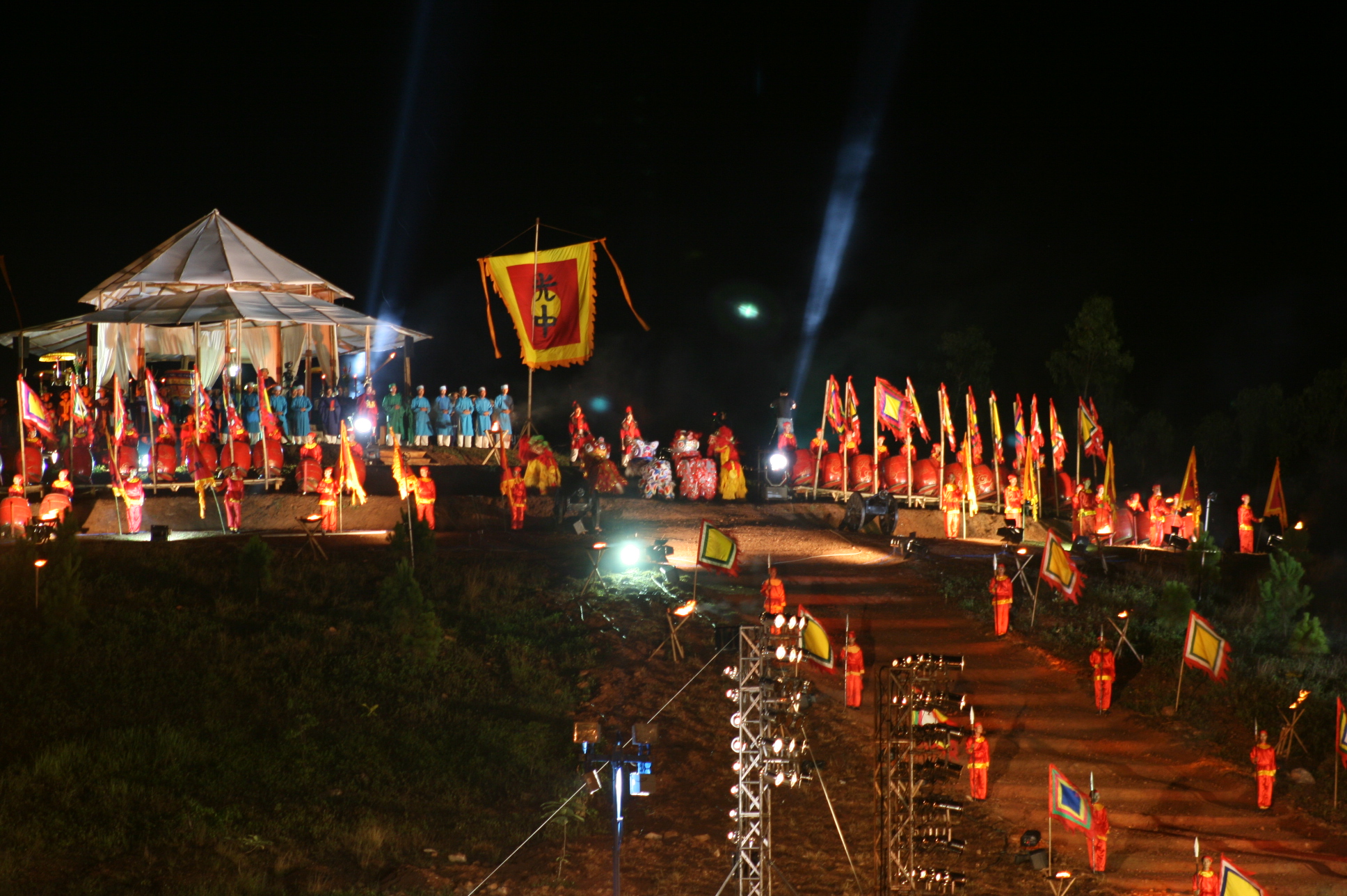
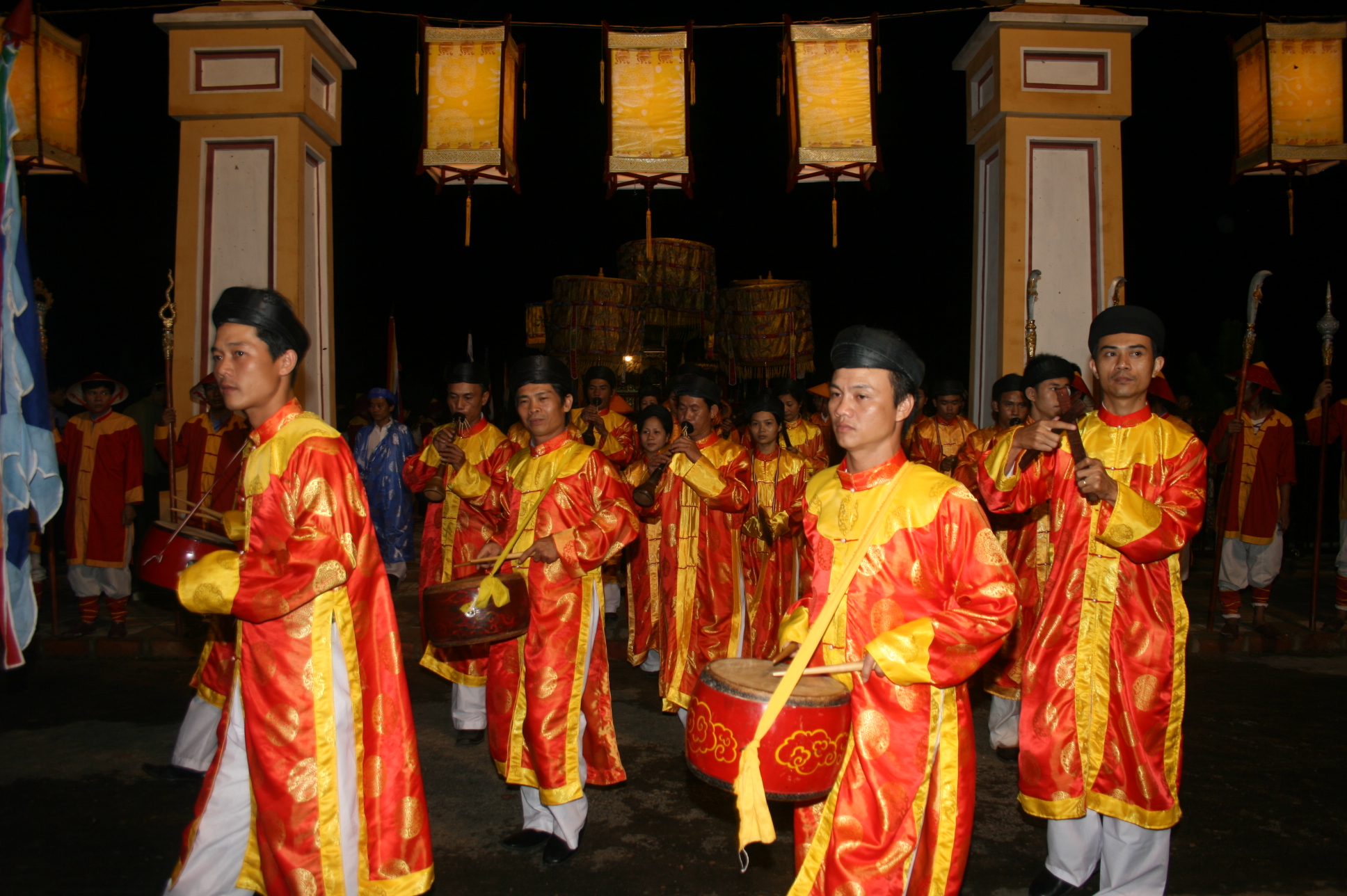
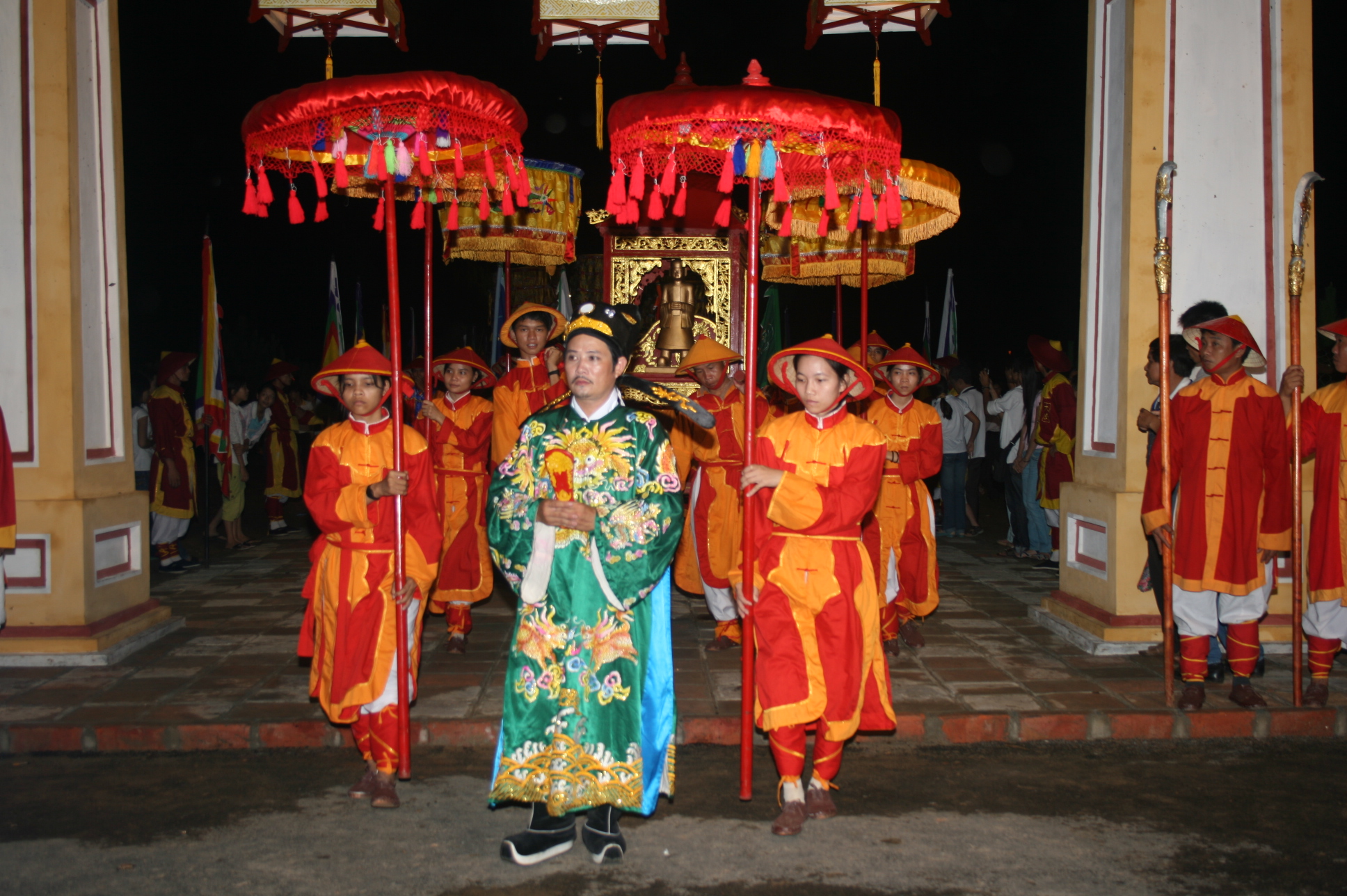
When the Nam Giao ceremony is reconstructed, its scale overwhelms the senses. The imperial procession — hundreds of performers in full Nguyen court dress — departs from the Imperial Citadel and moves through the ancient capital's streets in strict ceremonial formation. Dragon robes, wing-tiered court hats, ceremonial boots, multi-coloured parasols — every detail restored according to court protocols. Nhã nhạc — the court orchestra of 16 traditional instruments from đàn tranh and đàn tỳ bà to ceremonial drums and stone chimes — sounds at each phase of the ritual. The eight-row court dance (bát dật) — 64 dancers arranged in eight rows of eight — is performed on the Phuong Dan platform. When the officiant (representing the emperor) ascends the Vien Dan, all court figures kneel, and the music softens to near-silence — only wind in the ancient pines.
Royal court music (nhã nhạc) — the sonic soul of the Nam Giao ceremony — is an extraordinary heritage in its own right. UNESCO recognised nhã nhạc as a Masterpiece of Intangible Heritage of Humanity in 2003, giving global standing to a musical tradition once confined within imperial walls. Nhã nhạc encompasses several forms: đại nhạc (large orchestra for outdoor ceremonies), tiểu nhạc (smaller ensemble for inner palace), nhã ca (ceremonial song), and vũ khúc (dance suites). In the Nam Giao ceremony, đại nhạc takes central importance — its sound must be large and majestic enough to 'reach Heaven.' Today, nhã nhạc is maintained and transmitted by the Hue Monuments Conservation Centre, with dozens of young inheritor-musicians training under elderly masters.
Visiting the Nam Giao Esplanade — whether on ceremony day or any ordinary day — means stepping into a different register of time. The esplanade occupies an ancient pine grove, completely separated from city noise. The gradual ascent through three low tiers creates a progressive feeling of withdrawal from the ordinary world. On the uppermost platform — the Vien Dan — there is only sky, wind in pines, and occasionally birdsong. The pale stone paving still holds the marks of millions of footsteps across centuries. On ceremony days, when hundreds of figures in Nguyen imperial dress stand silent in solemn stillness, incense and ceremonial smoke drift through the tiers, and nhã nhạc sounds with austere grandeur among the ancient pines — in those moments, the boundary between present and past becomes so thin as to almost disappear.
"Giao sacrifice addresses Heaven; she sacrifice addresses Earth" — the two ancient Chinese rites that the Nguyen dynasty adapted as their own.
Khâm Định Đại Nam Hội Điển Sự Lệ (Nguyễn dynasty official rite codex)
Highlights not to miss.
The Nam Giao Esplanade's architecture is a cosmological diagram rendered in stone: the round tier (Heaven), the square tier (Earth), the base platform (Humanity) — reflecting the Three Powers (tam tài) worldview of East Asian philosophy. Only the Son of Heaven — Thien Tu — was permitted to ascend to the highest Vien Dan. Each tier is paved in different stone, oriented to geomantic compass bearings, and surrounded by pine trees intentionally planted from the earliest Nguyen period. The entire esplanade complex should be experienced as a continuous architectural and philosophical statement — not as individual components.
Hue royal court music (nhã nhạc) is the Nguyen dynasty's most sophisticated ceremonial music form, UNESCO-recognised in 2003. In the Nam Giao ceremony, nhã nhạc serves as the language of communication between emperor and Heaven: each musical piece corresponds to a specific ritual phase, each instrument occupies a defined position and function in the ensemble. Hearing nhã nhạc at the Nam Giao Esplanade on a pine-wind afternoon is an experience impossible to replicate in any conventional performance space.
The procession from the Imperial Citadel to the Nam Giao Esplanade is the single most compelling moment of the entire reconstructed ceremony: hundreds of figures in complete court dress moving through the streets of modern Hue, creating a peculiar and beautiful rupture of time. Every detail of the costume — colour, pattern, accessories — follows Nguyen court rank hierarchy. Ceremonial music accompanies the procession throughout. This is one of the most historically faithful ceremonial re-enactments in Southeast Asia.
The Nam Giao Esplanade lies on Hue's southern axis, in the same direction as the mausoleums of Tu Duc, Khai Dinh, and Gia Long. A full day exploring this southern route — starting at the Esplanade in the morning and continuing to the royal mausoleums in the afternoon — creates a geographically and thematically coherent journey: from the place where emperors addressed Heaven to the places where emperors now rest.
How to attend & get there.
Prepare to Understand Deeply
The Nam Giao ceremony is not a street festival — it is a complex court ritual with profound philosophical and historical meaning. Reading in advance about the Nguyen dynasty, nhã nhạc, and the concept of the Son of Heaven (Thien Tu) will substantially deepen your engagement with what you witness. The Hue Royal Antiquities Museum (within the Imperial Citadel) holds artefacts and explanatory material about the ceremony.
Visit the Esplanade on an Ordinary Day
Even when no ceremony is held, the Nam Giao Esplanade repays a dedicated visit. The site is quiet, shaded by ancient pines, and carries a distinctive sacred quality of atmosphere. Come in the early morning or late afternoon when light filters through the pine rows — this is the best time for photography and absorbing the atmosphere. Admission is typically much lower than the Imperial Citadel and the site is much less crowded.
Sources
- 1.Lễ tế Đàn Nam Giao — phục dựng nghi lễ hoàn mỹ của triều Nguyễn
Báo Thừa Thiên Huế · 2026-06-20
- 2.Đàn Nam Giao và nghi lễ tế trời của triều Nguyễn
Trung tâm Bảo tồn Di tích Cố đô Huế · 2026-06-20