
History & story.
Ham Ho is a roughly 3-kilometre granite gorge along Ham Ho stream — a waterway flowing from the An Lao mountain range down into the Tay Son hills. As it flows through, the stream must weave between, around and over enormous granite boulders, each weighing tonnes and piled into an exceptionally varied gorge landscape. The result is a continuous sequence of deep green pools, small waterfalls, rock caves and natural rock bridges — each 50–100 metre section a completely different landscape. The name 'Ham Ho' according to local people comes from the roaring sound of water entering the large rock hollows — 'ham' meaning hollow, 'ho' meaning resounding sound.
Tay Son people call Ham Ho the 'little Dragon Gate' — the local Dragon Portal, referring to a legend that this is where the Dragon God dwells. In Vietnamese folk culture, deep water amid large rocks is often linked to legends of dragons and water spirits — and Ham Ho has sufficient geographical conditions to nourish such legends: in some sections the water is too deep to see the bottom, the sound of water entering rock hollows creates mysterious echoes, and enormous boulders are positioned as if arranged by some unseen hand. In the dry season (March–August), water is clear enough to see the rock bottom of the pools; in the wet season (September–November) the stream rises dangerously — beautiful but inaccessible.
Ham Ho ecological tourism site was developed from the early 2000s, with a walking path along the stream, suspension bridges across narrow sections and a supervised swimming area. The primary forest on both sides of the stream remains largely intact — with large old-growth trees, giant ferns and climbing vines covering the rocks in year-round green. Thanks to the forest canopy, air temperatures in the Ham Ho gorge are 3–5 degrees cooler than the surrounding area even in harsh summer. This is particularly significant for Binh Dinh — a province with intense year-round heat — as Ham Ho provides a rare 'heat escape' experience within the province itself.
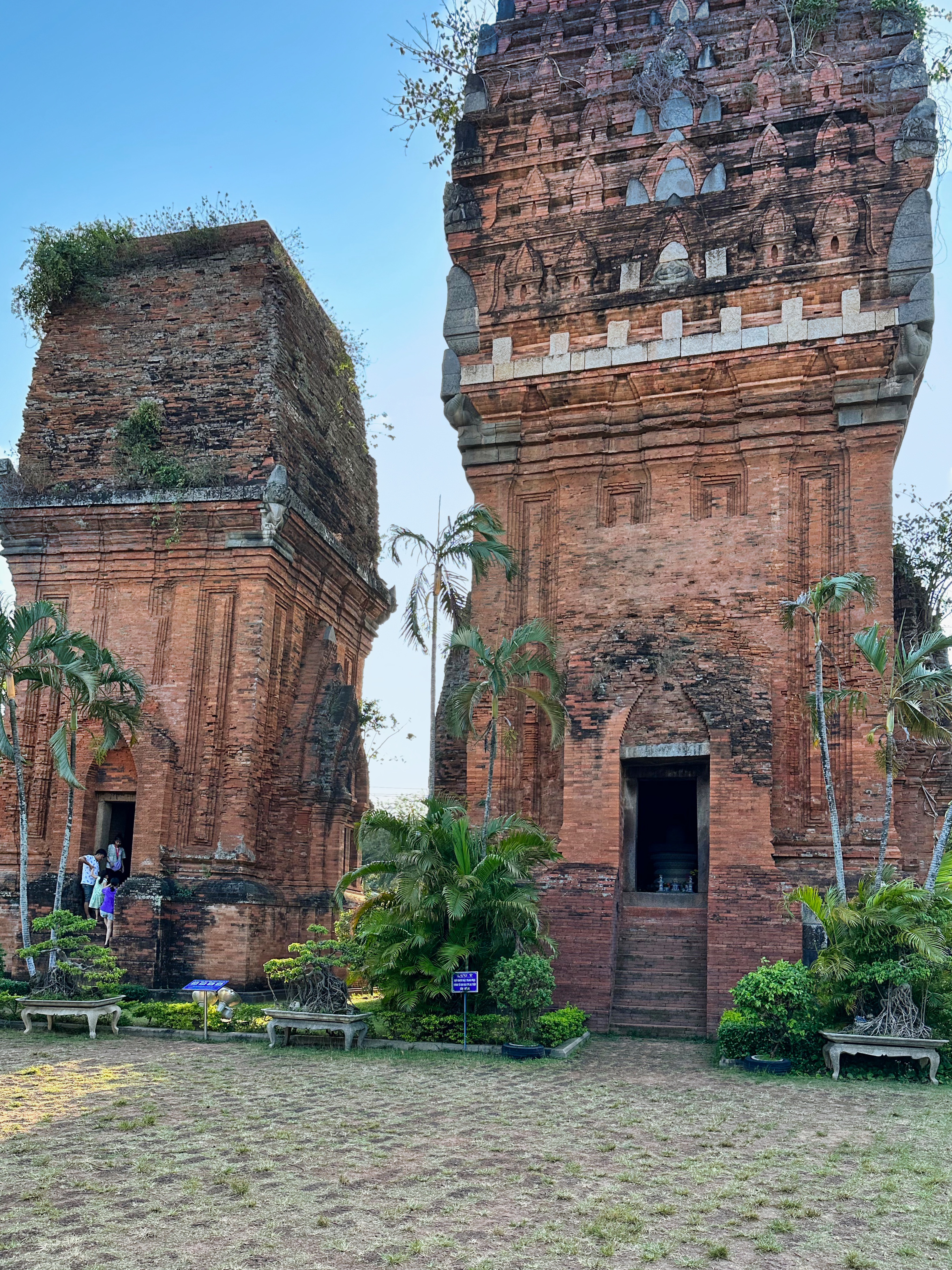
Ham Ho is in Tay Son District — the same area as Quang Trung Museum and Dương Long towers, forming a perfect history-nature triangle for a single-day exploration. From Quy Nhon to Ham Ho takes about 1.5 hours by motorbike on Highway 19 then local road. The ideal season is April–July when the stream has enough water for swimming but the rainy season has not yet begun. On weekends and holidays Ham Ho can be quite crowded — weekdays are much quieter and a better experience for those seeking nature.
"Ham Ho has no 'Do Not Swim Here' signs because people understand — where there's a big rock, there's a Dragon God. Who'd be so foolish?"
— Người dân địa phương huyện Tây Sơn / Tay Son District local resident
Highlights not to miss.
Dozens of natural swimming pools formed between granite boulders are the most beloved feature of Ham Ho. Pool water is turquoise-coloured from reflection of rock and overhanging forest, with depth varying from 1–4 metres by section. In summer these pools are excellent for swimming — particularly for children and families as water is calm within the pools. Small waterfalls between pools create continuous water sound in the primary forest setting — a perfect natural soundscape.
The primary forest canopy covering Ham Ho gorge is what distinguishes it from most stream swimming destinations in central Vietnam. Temperatures inside the gorge are 3–5 degrees cooler than outside — enough to sit by the stream all day without sun exposure. Large old-growth trees with ferns and moss on the boulders create a primordial green that many nature photographers particularly love about Ham Ho.
The walking path along Ham Ho gorge extends approximately 3km one way — enough for 2–3 hours of walking and exploring stopping points. Suspension bridges crossing narrow stream sections add a mild adventure element, particularly appealing to children. The path is generally not overly demanding but has some rock-climbing sections requiring care — hiking shoes are better than sandals.
Visit Ham Ho on a weekday (Monday–Thursday) to avoid weekend crowds. Early morning (7–9 AM) is coolest and stream water is clearest before many swimmers enter. Remember to bring food — the nearest restaurant is 5km from the site and on-site stalls close before 5 PM.
How to visit & get there.
Getting to Ham Ho
Ham Ho is about 55km northwest of Quy Nhon, into Tay Son District via Highway 19, then follow signage to Binh Tuong commune. Motorbike or car from Quy Nhon takes about 1.5 hours. Combine on the same day with Quang Trung Museum (8km east) and Dương Long towers (15km east) — the perfect Tay Son day route.
At Ham Ho
Allow 3–4 hours to walk the full 3km route and swim. Bring swimwear and towel — the natural pools in the gorge are the main attraction. Wear hiking shoes rather than sandals as some path sections involve slippery rock climbing. Bring food and water — on-site stalls exist but are expensive with limited choice. Absolutely avoid September–November rainy season — flood water rises quickly and is extremely dangerous.
Sources
- 1.Hầm Hô Tây Sơn — "tiểu Long Môn" của Bình Định
Tạp chí Tổ Quốc · 2026-06-26
- 2.Hầm Hô Tây Sơn — khu du lịch sinh thái giữa rừng già
VnExpress · 2026-06-26