History & story.
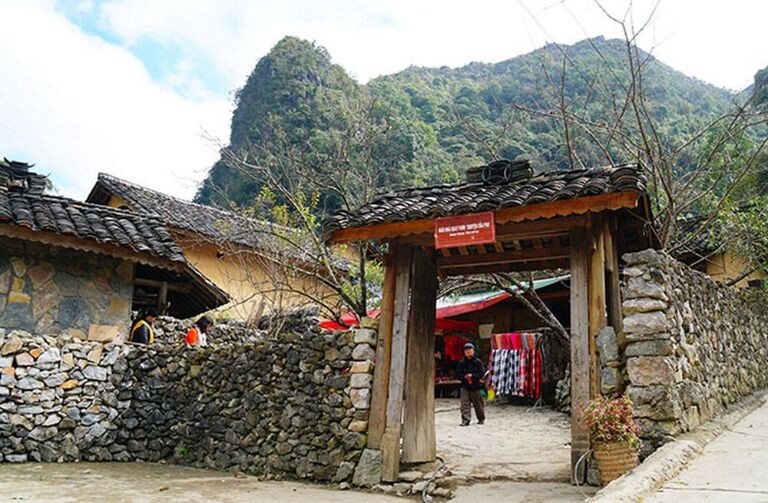
Pao's House is the rammed-earth home of the Mua Sua Pao family, built in 1947 in Lung Cam hamlet, Sung La commune, Dong Van district — about 25 kilometres west of Dong Van town. The house was built in traditional H'Mong architecture with thick rammed-earth walls, dry-stacked stone fences without mortar, and a naturally fitted stone courtyard. Decades passed in quiet obscurity until director Ngo Quang Hai chose it as the main filming location for 'Pao's Story' (2005) — a film that won Vietnam's Golden Kite Award (Cánh Diều Vàng) in 2006 and Best Film at the 50th Asia-Pacific Film Festival.
The film 'Pao's Story' follows Pao — an H'Mong girl growing up in the Sung La house between a disturbed biological mother and a devoted adoptive mother, on a journey to reclaim her identity and roots. Director Ngo Quang Hai spent months searching the entire karst plateau before deciding on the Mua Sua Pao family home in Sung La. The house had something rare on the plateau: it required no modification or added decoration — every detail from the earth walls to the tile roof to the stone fences was completely authentic and perfectly suited to the film's visual requirements.

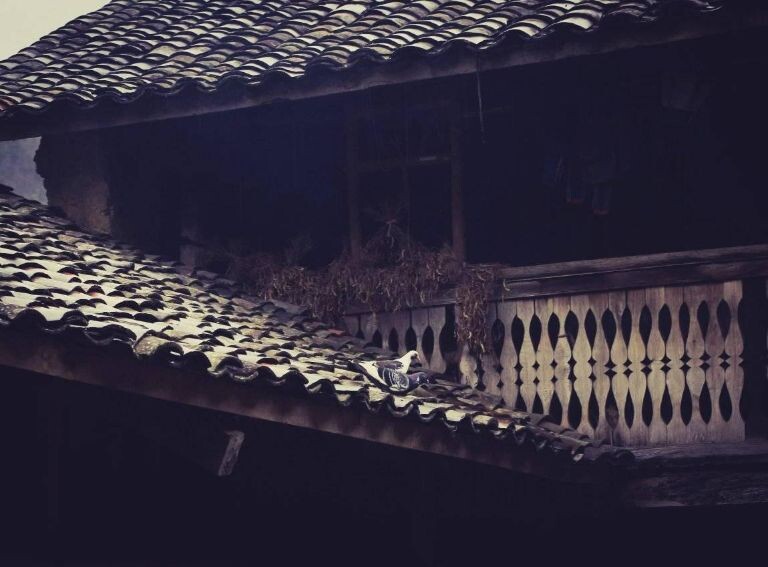
The architecture of Pao's House is the finest surviving example of traditional H'Mong construction on the Dong Van karst plateau. The earth walls were compacted from local clay using the rammed-earth technique: clay is poured into wooden moulds and tamped with dedicated wooden beaters until as dense as stone. Walls 50–60 cm thick resist rain, retain warmth in winter, and stay cool in summer. The Qing-style curved yin-yang tile roof has tiles that have survived nearly 80 years intact. The stone courtyard is laid from naturally flat slate stones without cement, the surface polished smooth by decades of footsteps.
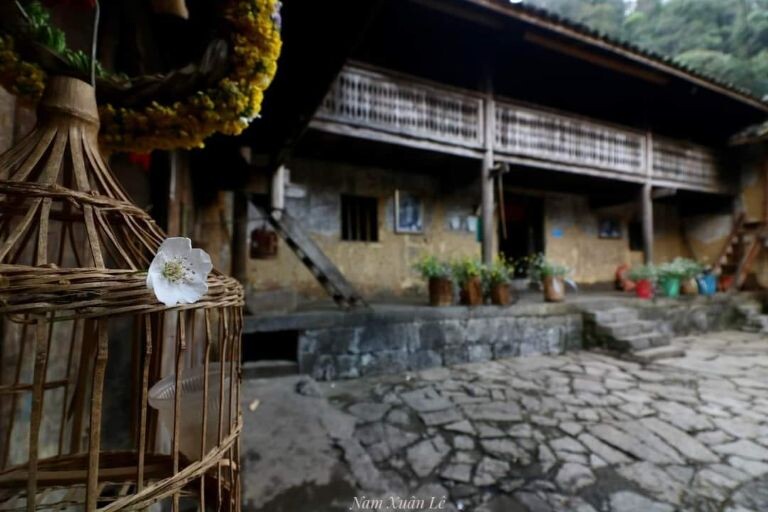
After the film was released and won its awards, Pao's House became a unique cinematic pilgrimage site in Vietnam. The Mua Sua Pao family continues to live in the house and opens it to visitors for 10,000–20,000 VND entrance. The house has not been renovated or modernised — everything is kept exactly as in the film. Surrounding the house, during October–November, buckwheat flowers bloom pink-white blanketing the entire Sung La valley, creating a scene that many visitors describe as even more beautiful than anything they saw on screen.
The remarkable thing about Pao's House is that precisely because nothing has changed — the earth walls still thick, the dry-stacked stones still mortarless, the curved tiles still intact — it has become the rarest thing in the world: a house that is still alive.
VnExpress Du Lịch, 2022
Highlights not to miss.
Every corner of the Sung La house is tied to a scene in 'Pao's Story' (2005). The stone courtyard where Pao played as a child, the creaking wooden gate where the adoptive mother would stand watching the road, the small window that casts a shaft of light into a dark interior — these details are memorised by many fans who seek them out when visiting. The host family happily shares memories from when the film crew stayed to shoot.
Pao's House lies in the Sung La valley — one of the most beautiful in the Dong Van karst plateau. Surrounding fields of buckwheat and maize alternate across the limestone terrain. In October–November, buckwheat flowers bloom pink-white across the valley, creating a natural landscape so cinematic that many visitors call it 'as beautiful as in the Pao film.' This is also one of the finest buckwheat flower viewing spots in all of Ha Giang.
The Mua Sua Pao family offers homestay accommodation inside the historic house itself, allowing guests to sleep within the space of the famous film. Dinner is cooked from local ingredients — thang co (bone stew), salted pork, and corn wine. In the morning, when the sun rises behind the limestone ridgeline and casts golden light across Pao's stone courtyard, guests often describe it as one of the most beautiful sunrises of their lives.
Pao's House in Sung La and the Vuong Mansion in Sa Phin are 10–15 km apart and both within Dong Van district. Combining both in one afternoon makes a perfect half-day: climb Lung Cu Flag Tower in the morning, visit the Vuong Mansion mid-afternoon, then arrive at Pao's House for the evening and stay overnight in Sung La.
How to visit & get there.
Getting There From Dong Van town, ride a motorbike approximately **25 km west** along a paved road through the Sung La valley. The road is paved but has some steep and narrow sections. Allow 40–50 minutes.
Visiting **Purchase a 10,000–20,000 VND entrance ticket** at the house. **Do not photograph inside rooms** if the family is using them — this is still an active family residence. **Try booking a homestay** for a much fuller experience than a 30-minute visit allows.
Sources
- 1.Nhà của Pao mùa hoa tam giác mạch
VnExpress · 2026-06-16
- 2.Hoang sơ đỉnh Mã Pì Lèng của hơn một thập kỷ trước
Dân Trí · 2026-06-16