History & story.
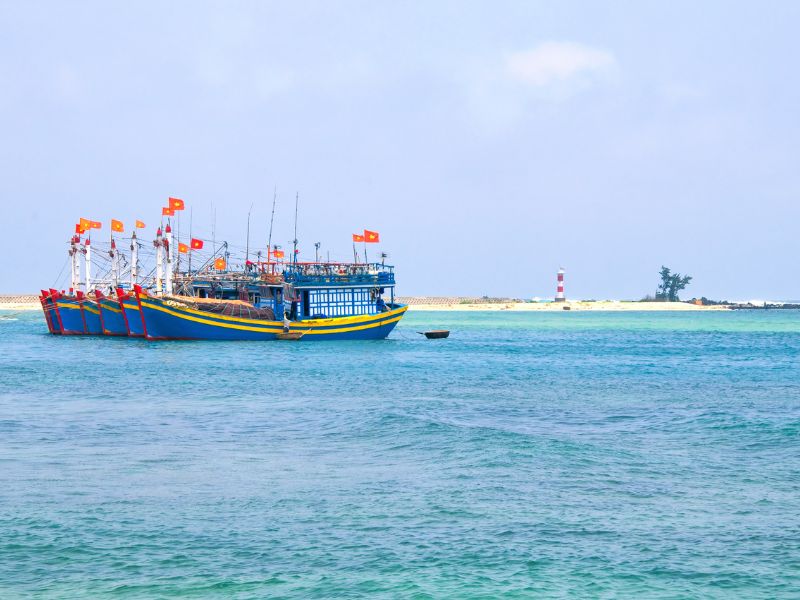
Ly Son Island lies 15 nautical miles northeast of Sa Ky port (Binh Son district, Quang Ngai), formed by volcanic activity millions of years ago. This small island district of 9.97 square kilometres comprises three islands: the Large Island (Cu Lao Re), the Small Island (Cu Lao Bo Bai), and Mu Cu island. Vietnamese settlers arrived on Ly Son from the 16th–17th centuries, following in the wake of earlier migrants from Binh Dinh and Quang Nam. From the harbour on the Large Island, the Nguyen lords organised the Hoang Sa and Bac Hai militias — special civilian-soldier units tasked with sailing to the Paracel and Spratly Islands to survey, collect marine resources, and defend maritime sovereignty. Historical records indicate that from the 17th century to the early 19th century, between 70 and 100 Ly Son soldiers departed each year, and not all returned.
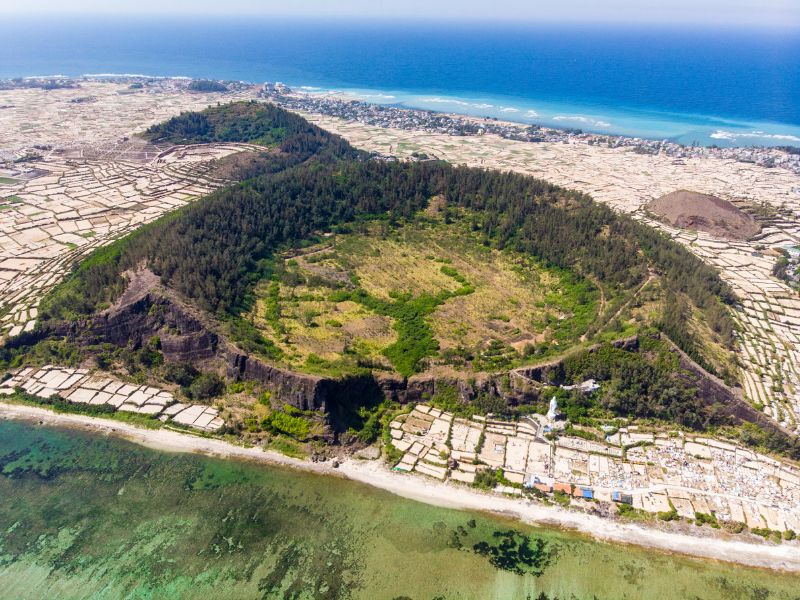
Ly Son's landscape is defined by its volcanic heritage: the 300-metre-wide Thoi Loi crater sits atop the Large Island, surrounded by garlic fields stretching to the shoreline. The mineral-rich black volcanic soil produces Ly Son's celebrated single-clove garlic — whose essential oil concentration runs three to four times higher than ordinary varieties. Each year Ly Son produces around 3,000 tonnes of garlic on barely 320 hectares of cultivated land — a remarkable yield for an island chronically short of fresh water. Beyond garlic, Ly Son's fishermen have harvested the island's rich marine waters for generations, bringing in abalone, sea cucumber, lobster, and prized reef fish.
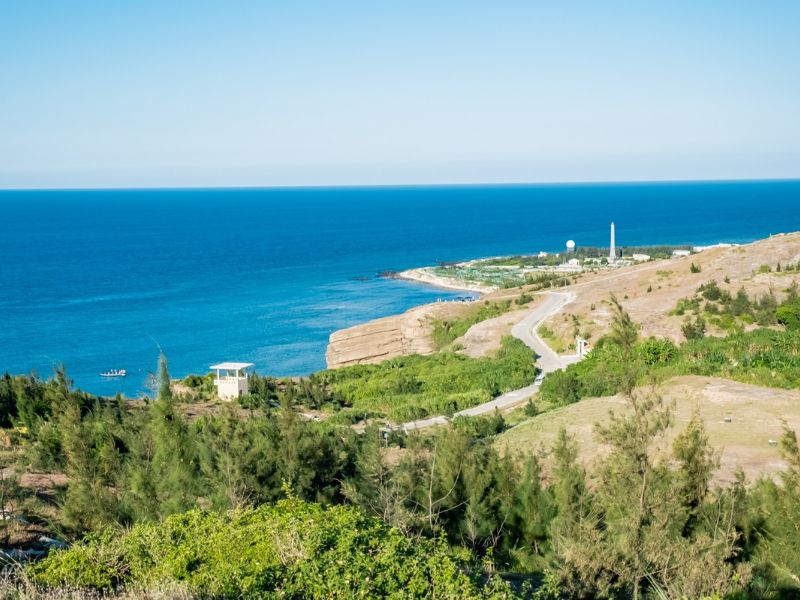
To Vo Gate is Ly Son's geological emblem — a natural basalt arch carved by millennia of wave action from cooled lava flows. At low tide, prismatic basalt columns stand upright like sentinels, silent testimony to the tectonic forces that created the island. Hang Pagoda (Cave Pagoda), hewn directly into a basalt cliff face, is the island's most singular temple — permanently cool and dim inside, it honours both the Buddha and the memory of soldiers lost at sea. The Fairy Well (Gieng Tien) is perhaps Ly Son's greatest geological mystery: a fresh-water spring that rises directly at the waterline, its sweet water somehow unmixed with the surrounding salt sea.
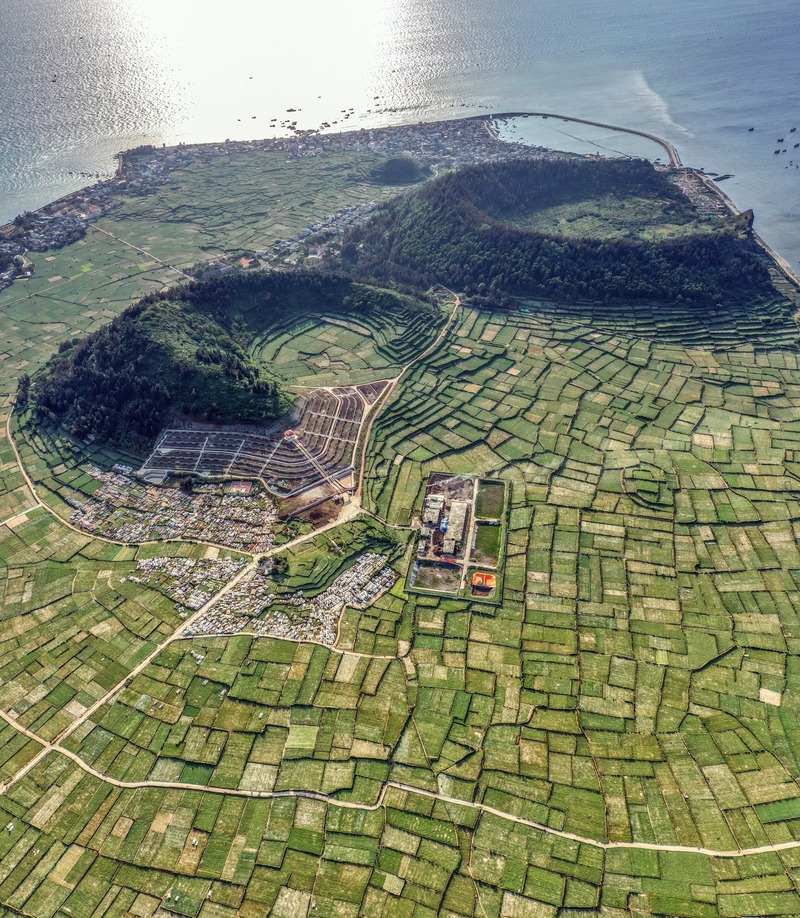
Today, Ly Son is Quang Ngai province's flagship tourist destination. High-speed ferries from Sa Ky port reach the island in 30 minutes, and at peak summer season the island welcomes thousands of visitors daily. The Am Linh Tu Festival in April, the Khao Le The Linh Hoang Sa ceremony in the third lunar month, and the Garlic Festival in March–April are the island's most culturally significant occasions. Researchers and journalists from Vietnam and abroad come to Ly Son to study the historical evidence of Vietnamese sovereignty over the Paracels — the imperial edicts, memorial steles, and ancient texts still preserved in clan houses and communal halls across the island.
Each year when the boats departed, wives wove bamboo coffins for their husbands knowing not everyone would return from Hoang Sa — that bamboo casket was the burial offering the soldiers carried with them out to sea.
Nhà nghiên cứu Nguyễn Đăng Vũ, Tạp chí Di Sản Văn Hóa, 2018
Highlights not to miss.
The 300-metre-wide Thoi Loi crater caps the Large Island, now blanketed in vegetation and garlic fields. Climbing to the Thoi Loi summit (169 metres) rewards visitors with sweeping views over the entire island, the East Sea, and the distant Quang Ngai coastline. This is Ly Son's finest sunrise and sunset vantage point — light filtering through the ancient volcanic bowl creates an atmosphere found nowhere else on the island.
To Vo Gate is the natural basalt arch at Ly Son's southwest corner — the island's most iconic geological feature and a favourite photography spot. Around To Vo, the coastline is lined with prismatic basalt columns standing upright like ruins of an ancient structure, formed when volcanic lava cooled and contracted from multiple cooling fronts simultaneously, producing the characteristic hexagonal columns. Low tide is the best time to explore the rock pools and the marine life clinging to the basalt faces.
Hang Pagoda (Cave Pagoda) is carved directly into a seaside basalt cliff face, permanently cool and dim inside, enshrining both the Buddha and the spirits of Hoang Sa soldiers. Nearby, Am Linh Tu — the communal shrine for the souls of those who never returned — is where the annual khao le the linh ceremony is solemnly performed. Together these two sites form Ly Son's spiritual heart, where islanders venerate both nature spirits and historical heroes with equal reverence.
Late afternoon (4:00–6:00 PM) at To Vo Gate offers the richest golden light. The garlic season in March–April (lunar calendar), when white garlic blossoms open against black volcanic soil, is Ly Son's most distinctive and photogenic landscape — and one found nowhere else in Vietnam.
How to visit & get there.
Getting to the Island **High-speed ferries from Sa Ky port** (Binh Son district, ~25 km from Quang Ngai city) are the only way out. The crossing takes about **30 minutes**; return tickets run 200,000–250,000 VND/person. **Book ahead** in summer — weekend sailings sell out. The early 5:00–6:00 AM departure gives you a full day on the island.
Exploring the Island **Rent a motorbike** (~150,000 VND/day) or electric bicycle to explore freely. Circumnavigating the Large Island covers only ~15 km, enough to visit To Vo Gate, Hang Pagoda, Am Linh Tu, and climb Thoi Loi in a single day. **Don't skip the garlic breakfast**: garlic clam, garlic rice, and garlic squid are the island's most distinctive dishes.
Sources
- 1.Lý Sơn nổi tiếng với đặc sản tỏi một nhánh
Tạp chí Tổ Quốc · 2026-06-26
- 2.Khám phá vẻ đẹp của đảo Lý Sơn Quảng Ngãi
VietnamPlus · 2026-06-26