Story & history.
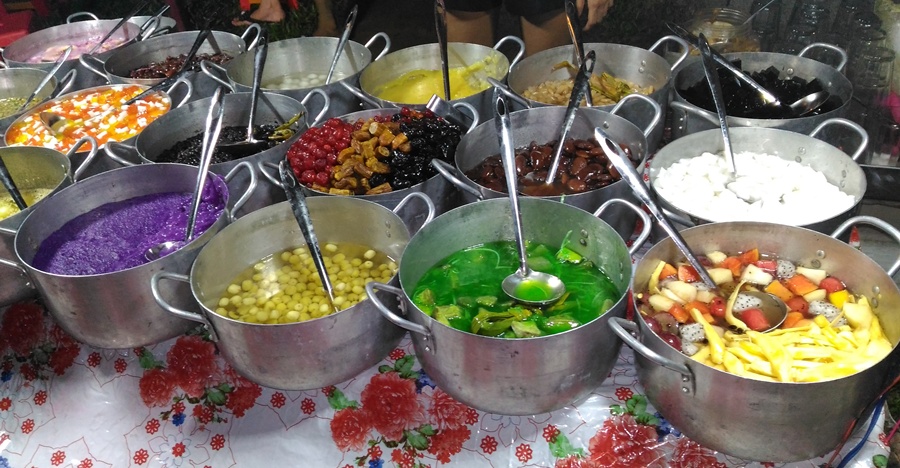
Che Hue is not one dessert but an entire culinary universe with over 40 distinct varieties — from smooth mung bean pudding with coconut milk, to jewel-clear red bean tapioca dumplings, refreshing lotus seed and longan sweet soup, or fragrant taro in coconut cream — all reflecting Hue's imperial culinary philosophy: every dish, however small, must achieve perfection in aroma, color, and flavor. The origins of che Hue are intertwined with the Nguyen dynasty imperial kitchens where court cooks were also physicians — each dessert variety was designed to nourish a specific organ or balance yin and yang according to traditional medicine. Fresh lotus seeds from Tinh Tam — the famous lotus pond inside the Hue citadel — are the most prized ingredient in che Hue, simultaneously nutty, fragrant, and gently bitter from the lotus embryo in a way that creates indescribable depth. Hue people use the term 'che cung dinh' (royal dessert) to describe the most refined varieties handed down from the imperial kitchen — a phrase that is both a source of pride and the standard every Hue dessert cook aspires to reach.
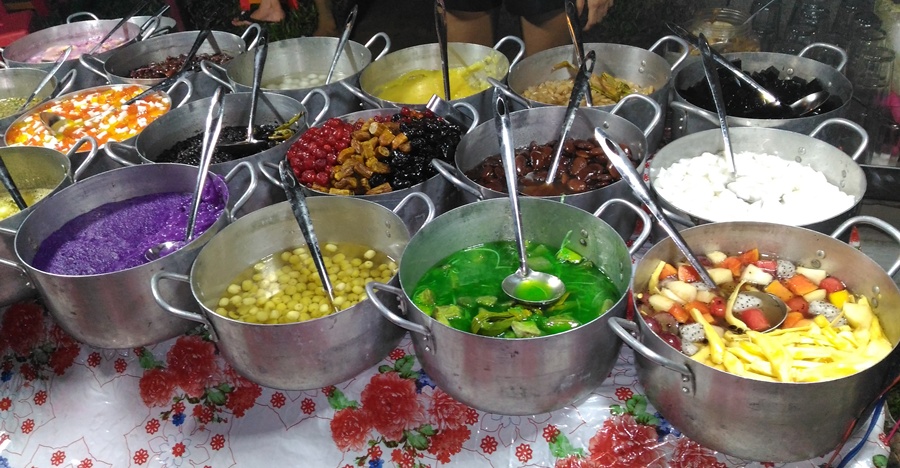
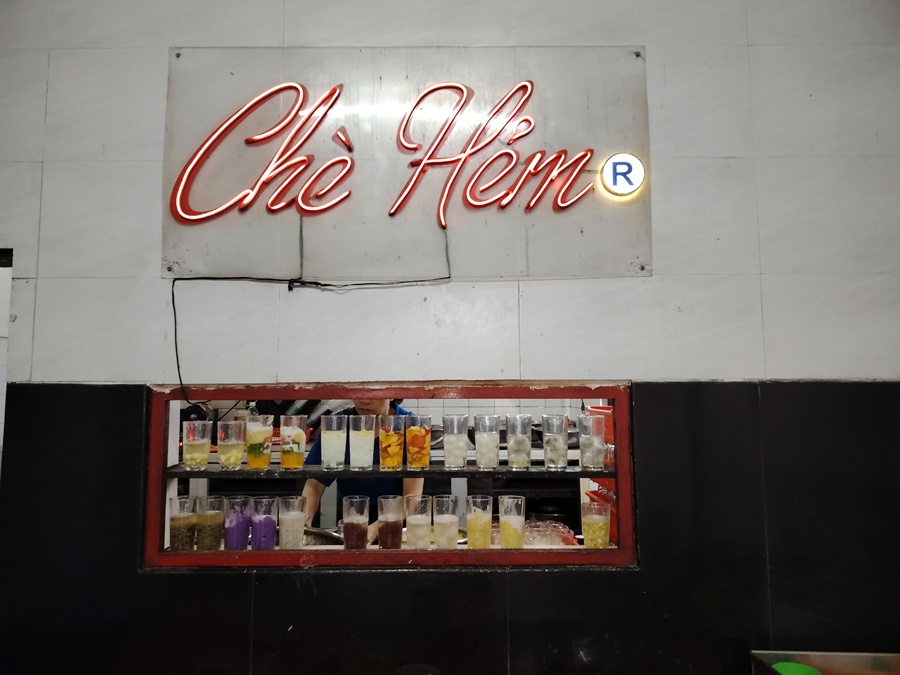
The richness of che Hue comes from the diversity of local ingredients: mung beans, red beans, black beans, purple sweet potato, taro, lotus seeds, longan, lychee, tapioca, arrowroot starch — all capable of becoming the base of a different dessert depending on the cook's skill and creativity. Fresh coconut milk is an indispensable component in most Hue desserts — pressed fresh from mature coconuts, its fat and fragrance are entirely different from canned alternatives. Notably, che Hue is typically served warm or at room temperature rather than chilled as in southern Vietnam — Hue people believe cold serving destroys the delicate aromas of the ingredients. The most celebrated che stalls in Hue cluster along Trinh Cong Son street and the Nguyen Dinh Chieu pedestrian zone near Trang Tien Bridge — small shops with low tables set out on the pavement are an indelible image in the memory of anyone who has visited Hue.
The culture of eating che in Hue is an important social ritual: people eat dessert on evening outings, after family meals, during ancestral memorial ceremonies, and most importantly when receiving honored guests. Presenting a box of lotus seed pudding or black bean coconut cream dessert to visiting guests is the Hue way of showing refined and formal hospitality. Today many Hue dessert varieties are packaged and exported or sold widely in Vietnamese supermarkets, but connoisseurs maintain that the finest che Hue can only be tasted in Hue itself — where the freshest ingredients meet hands that carry the memory and love of generations. What people call the 'soul of Hue' — the elegance, refinement, and attention to every detail — is most perfectly expressed in a cup of dessert properly made and presented.
"Hue court chè has 36 varieties — each one a sweet poem about the history and aesthetics of a dynasty."
— Tuổi Trẻ, "Chè Huế — Nét văn hóa ẩm thực cố đô"
Ingredients — what makes the flavour.
Authentic Hue lotus seed chè must use seeds from **Tinh Tam Lake** — no industrial lotus substitute. Ask the shop owner about the lotus source before ordering. A proud Hue chè vendor will eagerly tell you about their local ingredient sourcing.
How to enjoy it properly.
Hot or Cold? Hue chè is typically served **warm or hot** in cool weather, cold or iced in summer. Royal court varieties like lotus seed chè are best consumed **warm** to appreciate their delicate fragrance. Folk varieties like corn or mung bean chè are excellent **cold**.
Explore in Sequence Start with **chè bắp** (the simplest), then try **chè hạt sen** (the base court variety), and finally **chè bột lọc heo quay** (the most complex and unique). Large Hue chè shops typically offer 15–24 varieties — don't hesitate to order multiple small cups to compare.
Editor-recommended eateries.
ⓘ Addresses and prices may change. Please verify before visiting.