History & story.
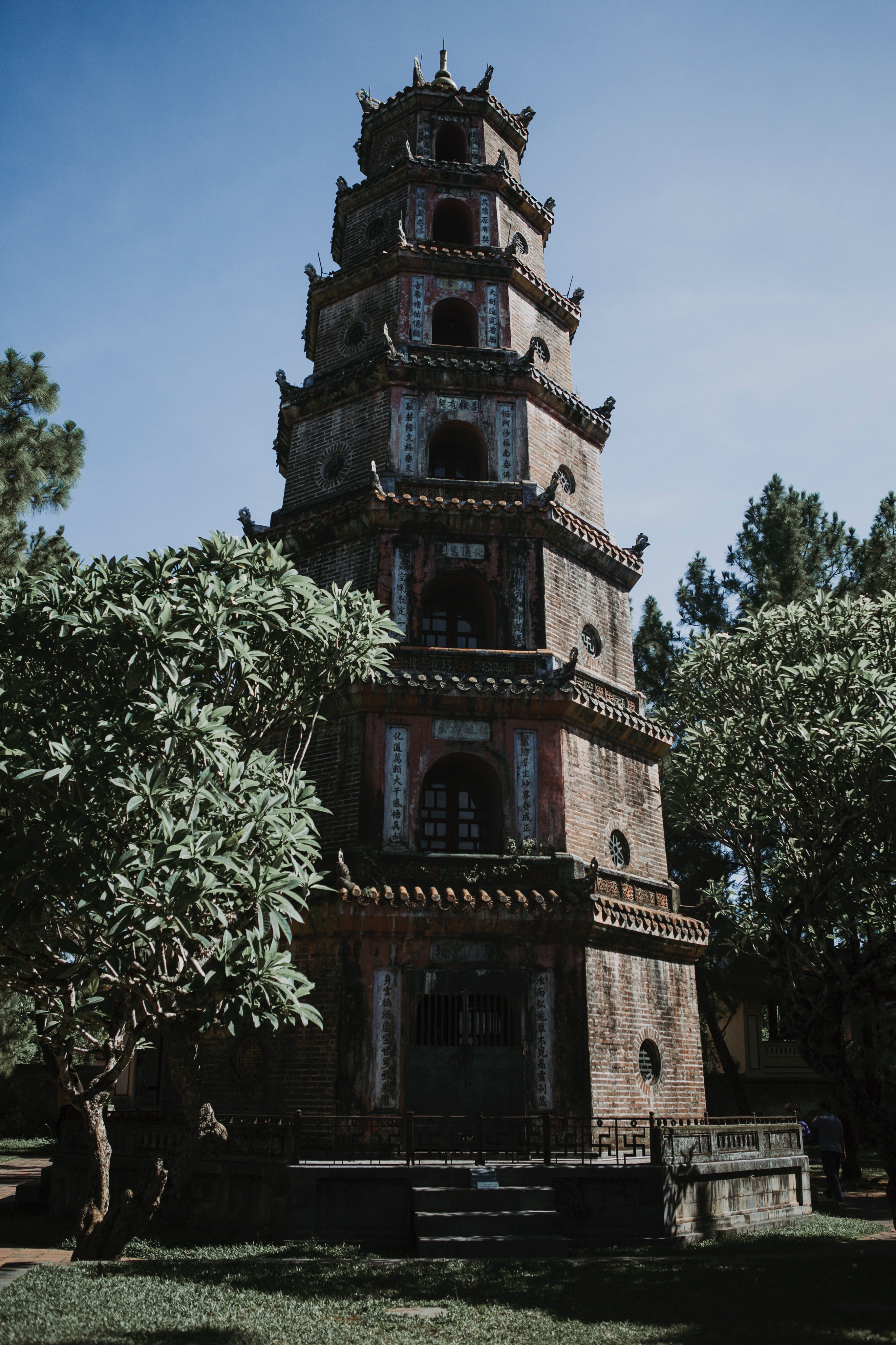
Thien Mu Pagoda — the oldest and most celebrated pagoda in Hue — sits atop Ha Khe Hill on the bank of the Perfume River, looking down on turquoise water curling around the base in a setting Nguyen dynasty poets praised as the 'supreme scenic wonder' of the ancient capital. The pagoda was founded in 1601 on the orders of Lord Nguyen Hoang — the founder of Dang Trong — after he heard the legend of an elderly woman in red appearing on the hill and prophesying a 'convergence of dragon vein energy'. The seven-storey Phuoc Duyen Tower built in 1844 under Emperor Thieu Tri, with seven hexagonal levels each enshrining a different Buddha, is Hue's unmistakable icon — the image of the tower reflected in the Perfume River at sunset engraved in the consciousness of generations of Vietnamese. The bronze bell cast in 1710 and weighing over 2,052 kg rings each dawn — its resonance reportedly carries 10 kilometers along the river into the city.
Thien Mu is not only a place of religious practice but the witness to the most significant political event of 20th-century Vietnam. Preserved here is a grey Austin Westminster sedan — the vehicle that carried the Venerable Thich Quang Duc from Thien Mu to the intersection on Phan Dinh Phung street in Saigon on 11 June 1963, where he self-immolated to protest the Ngo Dinh Diem government's suppression of Buddhism. Malcolm Browne's photograph of the self-immolation won the Pulitzer Prize and changed the world's perception of the war in Vietnam. The car bridges the pagoda's pure monastic space and the turbulent currents of modern history — evidence that this pagoda could not stand apart from its time. The pagoda grounds with ancient bodhi trees and fragrant white magnolias remain a peaceful meditation space sought by monks and nuns each day.
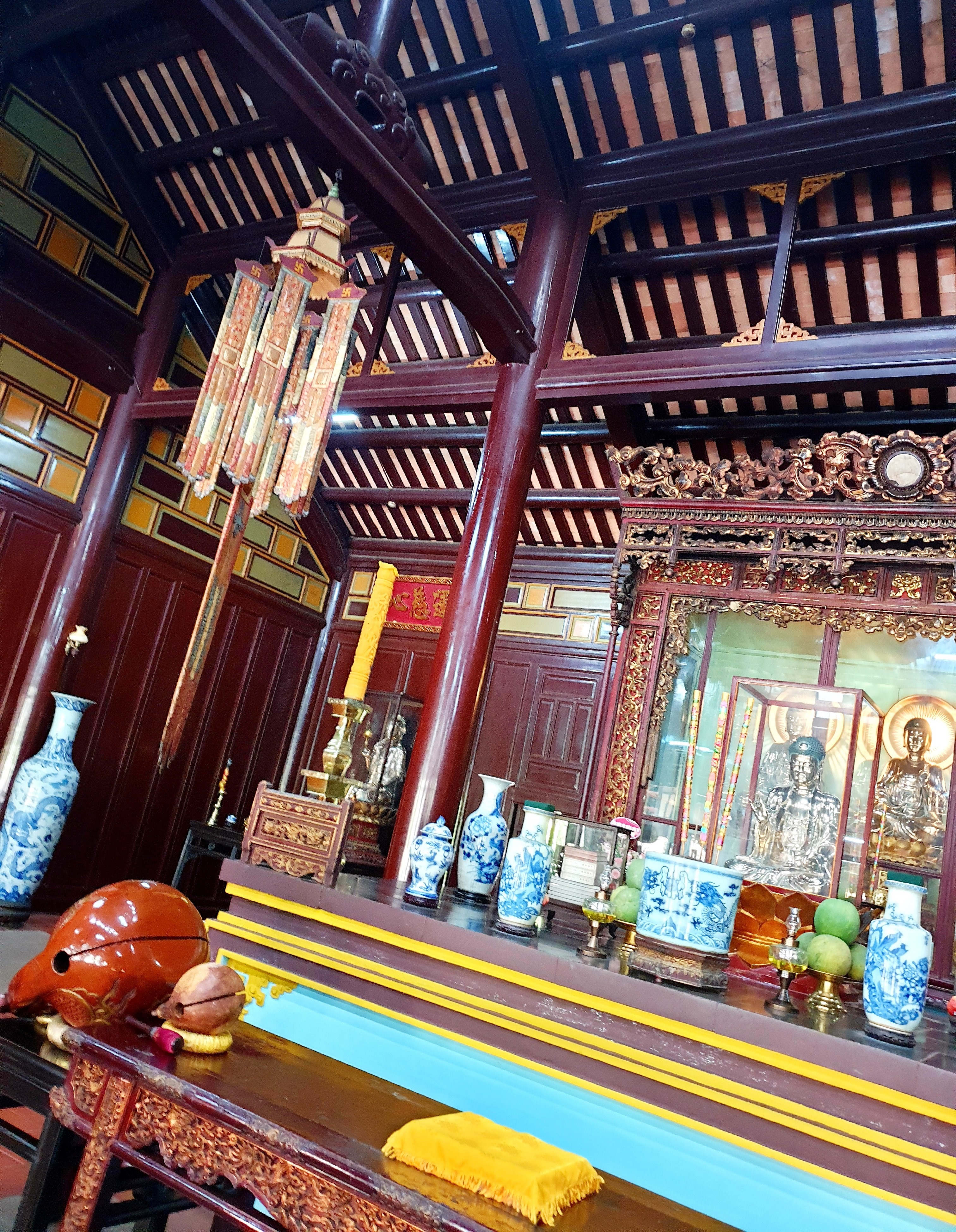
The pagoda grounds spread across multiple terraces rising from the riverside landing to the main sanctuary. Two enormous stone stelae mounted on tortoise plinths — the tortoise symbolizing permanence in Eastern cosmology — bear Chinese-character inscriptions composed by Emperor Thieu Tri recording the pagoda's history from 1601 through the 19th century. The stupa garden behind the main hall, with memorial towers of successive abbots under ancient shade trees, is the most peaceful and visually compelling corner of the complex. The main Dai Hung Bao Dien sanctuary with its gilded Buddha statues set against golden aureoles is the spiritual heart of the entire ensemble. Visiting the pagoda at dawn when the bronze bell's resonance marks the breaking day is a spiritual experience that hundreds of thousands seek each year to find peace amid modern life.
Thien Mu Pagoda is the one place where the fusion of nature, spirituality, and history that defines Hue identity can be most completely felt — the single space where the thousand-year-old bell's resonance, white magnolia fragrance, and the memory of the Austin car coexist. The pagoda has stood for over 420 years through wars, floods, and transformations, continuing as the most important Buddhist center of Thua Thien Hue. The annual Vesak and Vu Lan festivals transform the grounds into a spiritual celebration with thousands of flower lanterns released on the Perfume River — a fairy-tale image few places in Vietnam can replicate. The image of Phuoc Duyen Tower reflected in the Perfume River at dusk remains an irreplaceable symbol of Hue after more than four centuries.
The bell of Thien Mu, the crowing cock of Tho Xuong — that sound has resonated for more than three centuries through dynasties, wars, and transformations.
Ca dao dân gian Huế
Highlights not to miss.
Thien Mu Pagoda's most celebrated landmark, Phuoc Duyen Tower was erected in 1844 on Emperor Thieu Tri's orders, rising 21 meters through seven hexagonal storeys each enshrining a different Buddha. The solid brick tower has no exterior plaster — the rough brick surface has weathered from red to a warm ochre-brown over the centuries, creating an aged beauty impossible to replicate artificially. The image of the tower reflected in the Perfume River at dawn or dusk — seen from a passing boat — is one of the most beautiful scenes in Vietnam.
The bronze bell weighing 2,052 kg cast in 1710 under Lord Nguyen Phuc Chu is one of Thien Mu Pagoda's most treasured artefacts. Its resonance rings out each dawn and dusk and according to legend carries up to 10 kilometers along the Perfume River — that bell-sound entered Hue folk verse and became an unforgettable sonic memory for all who have lived in this city. The bell is displayed in a dedicated pavilion and is one of the very few intact royal musical artefacts surviving from the era of the Nguyen lords.
In a small pavilion within the pagoda grounds, the grey Austin Westminster sedan that transported the Venerable Thich Quang Duc to his self-immolation in Saigon on 11 June 1963 is preserved in its original condition. This is not merely a historical artefact but a symbol of the intersection of the Dharma and politics — a reminder that this tranquil pagoda could not stand apart from the flow of history. The Venerable Thich Quang Duc departed from Hue, from this very pagoda — and the photograph of his self-immolation changed the world's perception of the war in Vietnam.
The grounds behind the main sanctuary form a stupa garden containing memorial towers of successive abbots — moss-covered stone stupas under the canopy of ancient trees creating the most peaceful and visually compelling corner of the entire pagoda complex. Two enormous stone stelae mounted on tortoise plinths — the tortoise being a symbol of permanence and longevity — bear Chinese-character inscriptions composed by Emperor Thieu Tri recording the pagoda's history from 1601 through the 19th century. Tortoise-mounted stelae are the most widespread form of historical record-keeping from Vietnam's feudal dynasties — and Thien Mu's two stelae are among the finest surviving examples in Vietnam.
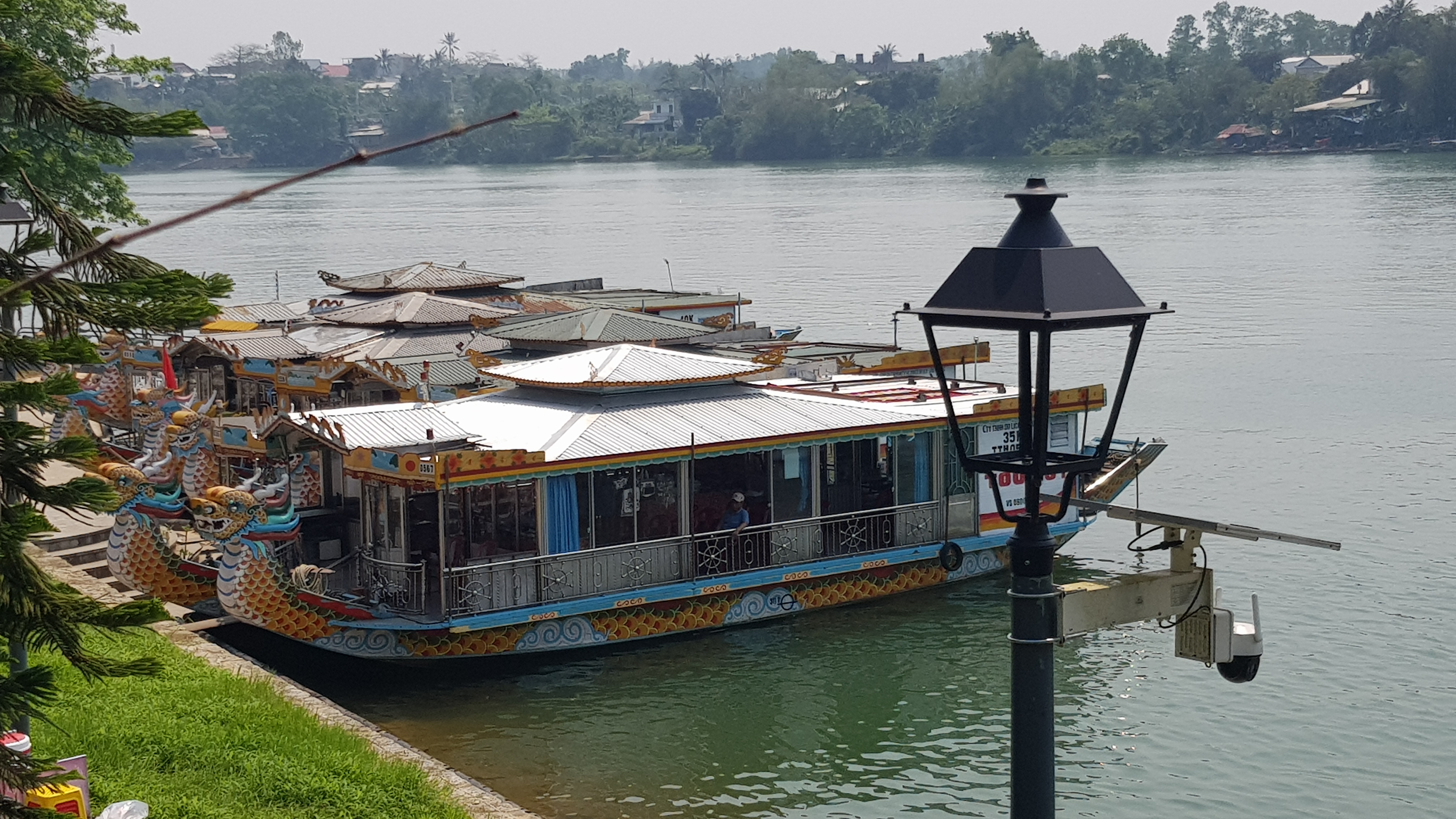
Combine your visit with a Perfume River boat tour that includes the royal mausoleums — most Hue boat operators offer this full-day package for around VND 100,000–150,000 per person, making it an excellent value for river scenery and heritage in a single trip.
How to visit & get there.
Getting There
Thien Mu Pagoda lies roughly 5 km west of central Hue along the northern bank of the Perfume River. The most memorable approach is by wooden dragon boat from the Toa Kham landing near Trang Tien Bridge — 30–40 minutes drifting past riverbanks and ancient villages before Phuoc Duyen Tower appears. Alternatively, the pagoda is accessible by bicycle or motorbike along Le Duan Street turning onto Kim Long Road — a pleasant route lined with ancient trees and traditional garden houses. Admission is free.
Etiquette and Practical Tips
As an active monastery with resident monks, visitors must dress modestly — no shorts or sleeveless tops, remove shoes before entering shrines, and keep voices low inside worship halls. Photography is permitted in most areas but avoid photographing monks directly during prayer or chanting. Combine the visit with a boat trip continuing upstream to the royal mausoleums for a full day of Hue's riverside heritage and a single memorable journey on the Perfume River.
Sources
- 1.Chùa Thiên Mụ — Di tích lịch sử và kiến trúc
Trung tâm Bảo tồn Di tích Cố đô Huế · 2025-03-10
- 2.Thien Mu Pagoda — Hue Attractions
Lonely Planet · 2025-03-12
- 3.Chùa Thiên Mụ — Biểu tượng của Cố đô Huế
VnExpress · 2025-03-18