History & story.
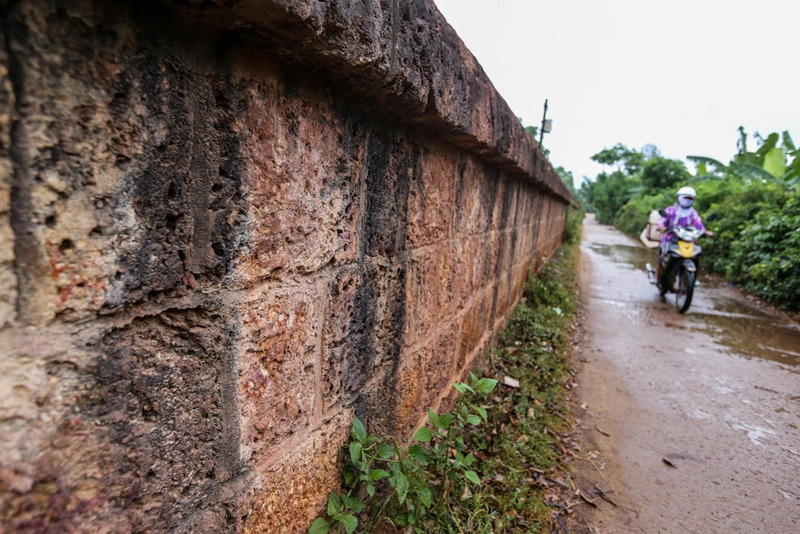
Đồ Bàn Citadel — known in Cham as Vijaya — was established around the 10th century when the Cham Pa kingdom moved its capital southward after repeated attacks from Đại Việt in the north. For over 500 years (approximately 999–1471), Đồ Bàn was the political, religious and economic centre of the Cham Pa kingdom — one of medieval Southeast Asia's most important maritime powers, controlling the spice trade routes between India and China. The rectangular walls stretched roughly 1,400 metres east-west and 1,100 metres north-south, enclosing a large royal precinct with numerous temples and palaces. The total wall perimeter was about 7 kilometres, constructed from compacted earth reinforced with Cham brick at strategic points.
On March 22, 1471, the Đại Việt army under the personal command of King Lê Thánh Tông broke through Đồ Bàn's walls after a three-day siege. Cham King Trà Toàn was captured; over 60,000 Cham people were killed and around 30,000 more taken as slaves according to Đại Việt chronicles. After this defeat, the Cham Pa kingdom lost most of its northern territory and survived only as small principalities in the south until the 17th century. Lê Thánh Tông renamed the citadel Hoàng Đế Citadel and used it as the administrative centre of the newly acquired Quảng Nam territory.
Three centuries later, in 1776, Nguyễn Nhạc — eldest of the three Tây Sơn brothers — chose Đồ Bàn as headquarters for the uprising, repairing and reinforcing the walls, adding military structures and renaming it Hoàng Đế Citadel. From here, Tây Sơn forces captured Saigon in 1777, before Nguyễn Huệ destroyed the Qing army at Hanoi in 1789. This is the only instance in Vietnamese history of an ancient capital being repurposed as the base for a revolution of an entirely different cultural and ethnic character.
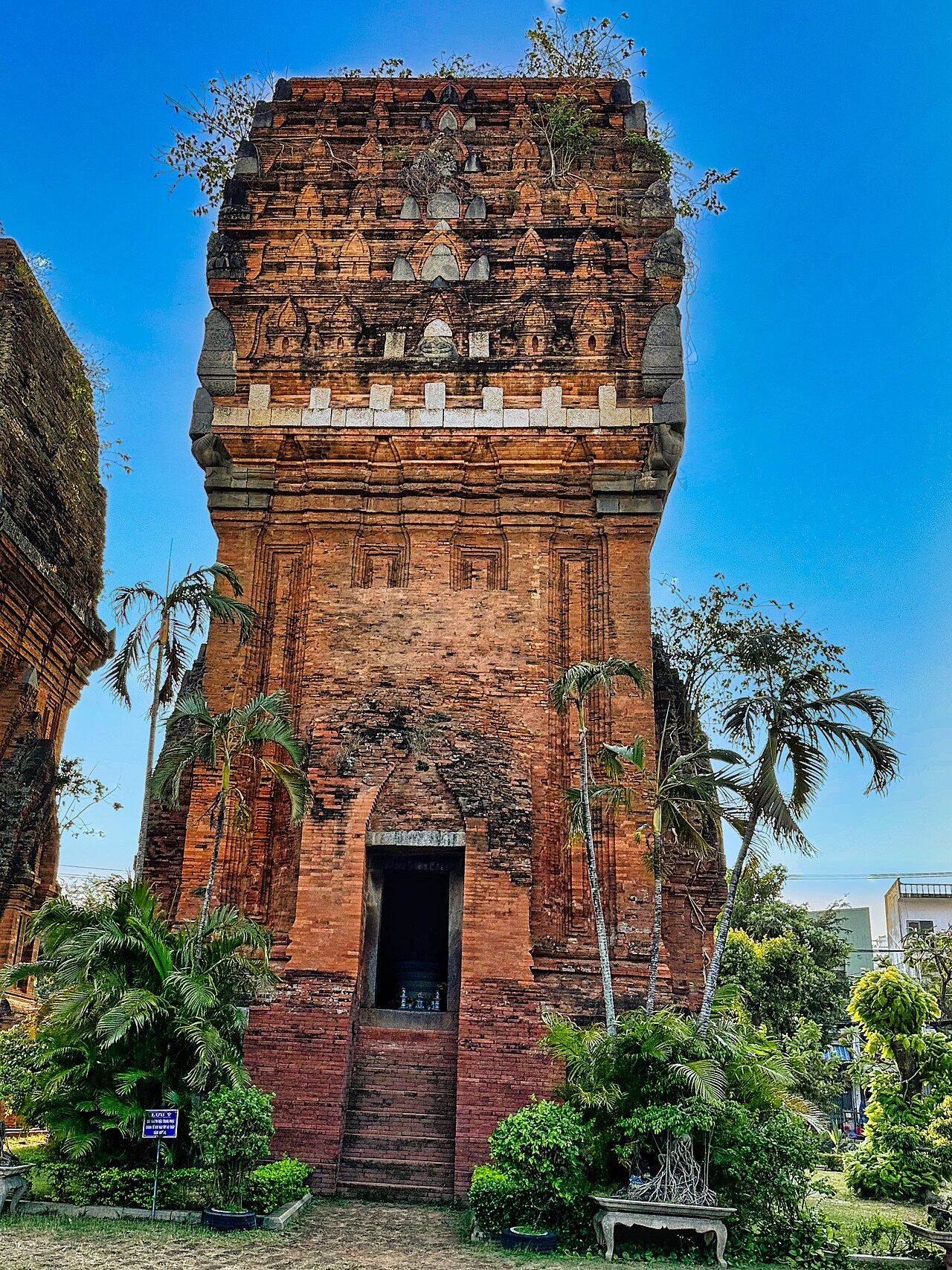
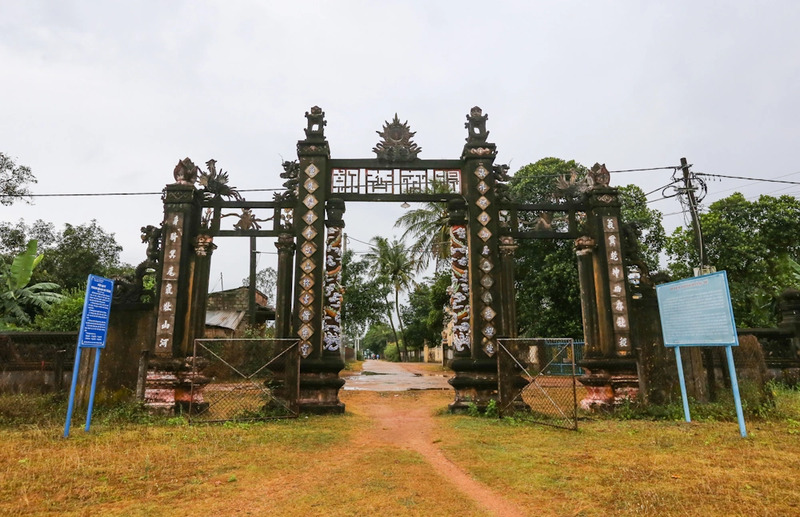
Today most of Đồ Bàn's area has become the residential district of Binh Dinh town in An Nhon. Walls survive only in scattered sections, most extensively along the north and east. Within the citadel area stand the Bà Hoả shrine (dedicated to a Cham queen), several small Cham towers and historical steles. In 2007 Đồ Bàn was designated a Special National Heritage Site. International archaeological projects are actively excavating multiple sites within the walls — many artefacts have been transferred to Binh Dinh Museum and the Cham Museum in Da Nang.
Đồ Bàn is the only place in Vietnam where you can stand on the ground of two entirely different civilisations — Cham Pa and the Tây Sơn — in a single moment.
— Lê Thị Thu Hiền, Viện Khảo cổ học Việt Nam
Highlights not to miss.
The north wall section, roughly 400 metres long, is the best-preserved part of Đồ Bàn Citadel, standing 3–5 metres high with an outer earth layer and inner Cham brick core. This is the best place to feel the true scale of a 1,000-year-old defensive structure and to distinguish Cham Pa construction techniques from later Vietnamese fortifications.
Within the citadel stands the Bà Hoả Shrine, dedicated to a Cham Pa queen — a trace of the matrilineal belief system in Cham Pa's matriarchal society. The small shrine is regularly visited by local residents who burn incense — a rare example of Cham Pa folk belief surviving within a Vietnamese community after 500 years of assimilation.
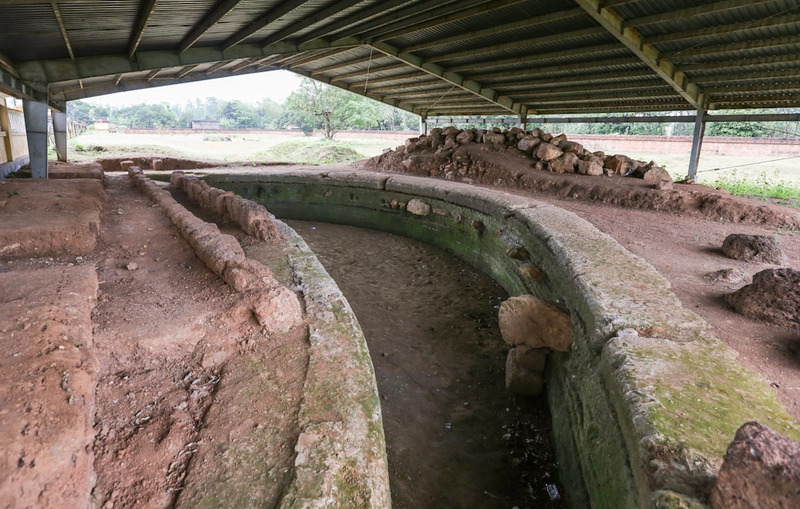
Multiple excavation trenches are open within the citadel — Vietnamese and international archaeologists searching for traces of the royal palace, drainage systems and religious structures. When fortunate, visitors can observe excavation work from a distance and see Cham Pa, Tây Sơn and even French-era artefacts layered on top of each other in the same stratigraphic sequence.
Ask locals in Binh Dinh town for the "north wall section" — it is the longest and most accessible stretch but has no signage from the main road. Early mornings often have research groups or archaeology students working at excavation sites — asking politely can yield much more detail than any information board.
How to visit & get there.
Getting to Đồ Bàn Citadel
The citadel is in Binh Dinh town, An Nhon District — about 30km north of Quy Nhon via National Highway 1A. Quy Nhon–An Nhon buses run frequently and stop near Binh Dinh town. Renting a motorbike is the most flexible way to explore the scattered wall sections.
Visiting Effectively
The citadel has no clear signage — download an offline Google Maps with the "Thành Đồ Bàn" pin before going. Allow 2 hours to walk the north wall section, visit the Bà Hoả shrine and view excavation trenches. Combine on the same trip with Banh It towers (15km away) and nearby Tây Sơn shrines.
Sources
- 1.Thành Đồ Bàn — kinh đô Chăm Pa trên đất Bình Định
Báo Nhân Dân · 2026-06-26
- 2.Thành Đồ Bàn Bình Định — dấu ấn ngàn năm Chăm Pa
Tạp chí Tổ Quốc · 2026-06-26