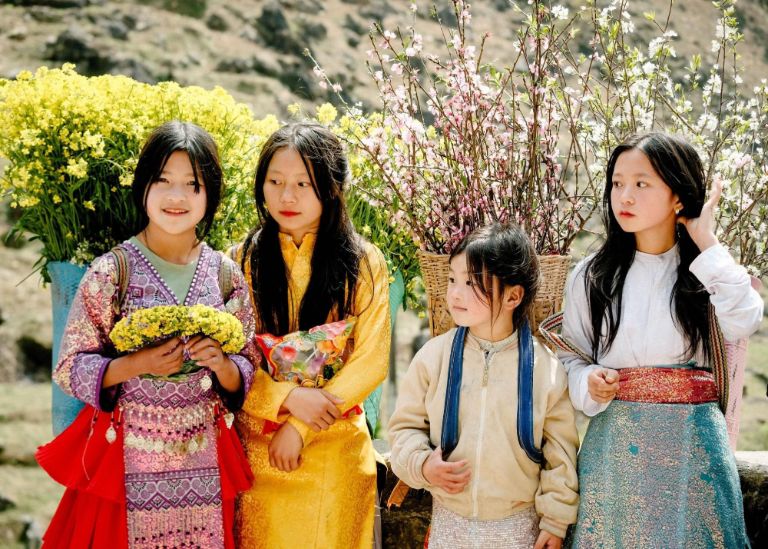
History & story.
Dong Van Old Quarter took shape from the late 19th century, around 1860, when Chinese families from Yunnan province migrated south and built the first commercial houses along two main streets. H'Mong, Tay, and Nung settlers followed, creating a uniquely multi-ethnic community on the karst plateau at altitudes of 1,000 to 1,600 metres. Dong Van town served as the commercial hub of the border region, where H'Mong highland villages traded goods with merchants from China. In 2009, the Ministry of Culture designated Dong Van Old Quarter a National Architectural and Artistic Heritage.
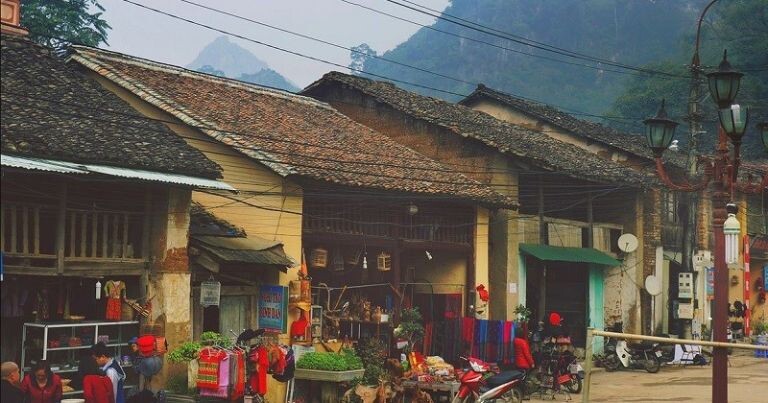
The hallmark architecture of the old quarter is rammed-earth construction — walls built from compressed clay and stone, 40–60 cm thick, capable of retaining warmth in winter and cool in summer under the plateau's extreme climate. Roofs covered in curved yin-yang tiles follow a Qing dynasty style, many now blanketed in centuries of green moss. Carved wooden columns and beams feature chrysanthemum, vine, and H'Mong folk motifs, reflecting the cultural exchange between co-resident ethnic groups. The thick earth walls and narrow window openings also served a defensive function during the unsettled border period of the 19th and early 20th centuries.
The Sunday market, held each week in Dong Van, is the old quarter's most vibrant pulse. From 5:00–6:00 AM, H'Mong people from distant villages carry down hand-woven brocade textiles, mountain produce, forest spices, traditional silver jewellery, and pack horses. Kinh, Chinese, H'Mong, and Tay languages mix together in the characteristically border-region market atmosphere. This is one of Vietnam's most authentic and colourful highland markets, still relatively unaffected by tourism commerce.
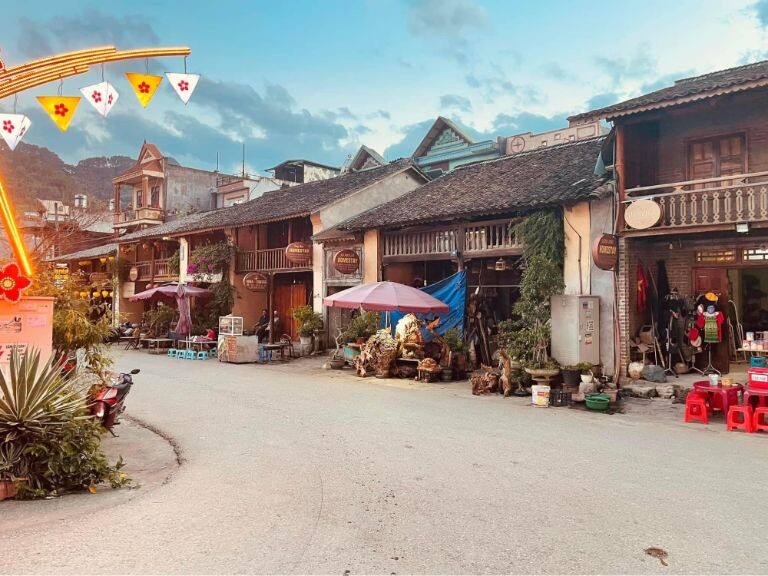
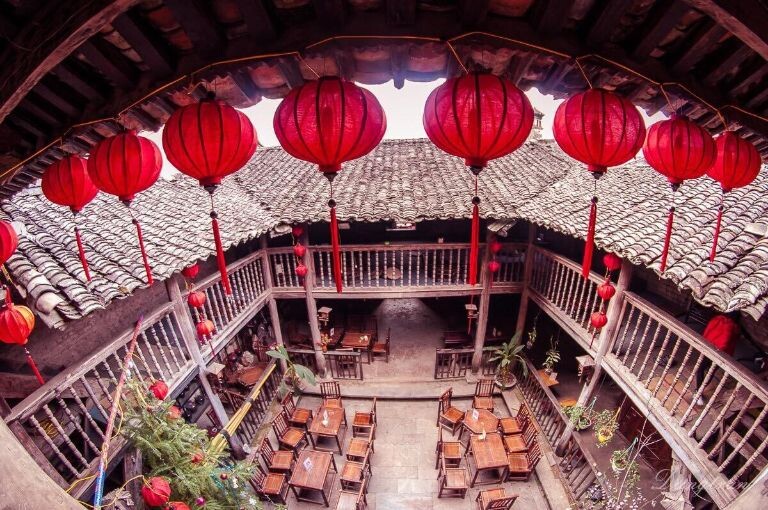
Today, Dong Van Old Quarter is the central rest stop on the Ha Giang Loop circuit, with dozens of homestays and coffee shops operating inside the historic rammed-earth houses. At night, oil lamps and red paper lanterns illuminate the stone lanes, creating an atmosphere so authentically old that visitors easily forget what century they are in. Local authorities are actively preserving the original architecture by subsidising restoration work to heritage standards and restricting new construction within the heritage core zone.
Dong Van Old Quarter is one of the few places on the plateau where the past and present sit drinking tea together inside a rammed-earth house.
VnExpress Du Lịch, 2024
Highlights not to miss.
Dong Van's Sunday market is one of Vietnam's most authentic and colourful highland markets. H'Mong, Lo Lo, and Giay people from remote villages carry hand-woven brocade, gem-set silver jewellery, hand-rolled tobacco, and mountain herbs to market from 5 AM. By 7–8 AM the market reaches its peak — the best moment to observe the brilliantly embroidered traditional dress of each ethnic group.
The oldest rammed-earth houses in the quarter date to the late 19th century, with 40–60 cm thick earth walls enclosing warm interior spaces for harsh plateau winters. Curved Qing-style yin-yang tile roofs, many tiles over a century old and blanketed in moss, complete the silhouette. Visitors can step inside several houses now operating as homestays to feel the thickness of the walls, the scent of damp earth, and the simple interior with carved wooden columns.
After sunset, Dong Van Old Quarter takes on a mysterious character as oil lamps flicker through narrow windows and red paper lanterns hang before old wooden gates. Many cafés operating inside original rammed-earth houses serve Tay coffee, thang co (horse bone stew), and local corn wine. Night temperatures in Dong Van often drop below 15°C in winter — a hot coffee inside a 150-year-old earth house is an unforgettable experience.
From the rooftop terraces of some old quarter homestays, you can watch the sunrise paint golden light across centuries of mossy yin-yang tiles — a scene found nowhere else in Vietnam. Book an upper-floor room at homestays near the quarter's centre for the best vantage point.
How to visit & get there.
Exploring the Old Quarter **Walk** along the two main streets and connecting lanes — the entire old quarter takes 30–45 minutes on foot. **Ask before entering** private rammed-earth homes — many are still actual residences of local families.
Market and Timing **Arrive before 7 AM on Sunday** to see the market at its most vibrant, before tour groups arrive. **Stay overnight** in a historic rammed-earth homestay to experience the evening street atmosphere and plateau sunrise.
Sources
- 1.Di tích kiến trúc nghệ thuật phố cổ Đồng Văn
Ban Tuyên Giáo Hà Giang · 2026-06-16
- 2.Cẩm nang du lịch Đồng Văn 2026 từ A–Z
VnExpress · 2026-06-16