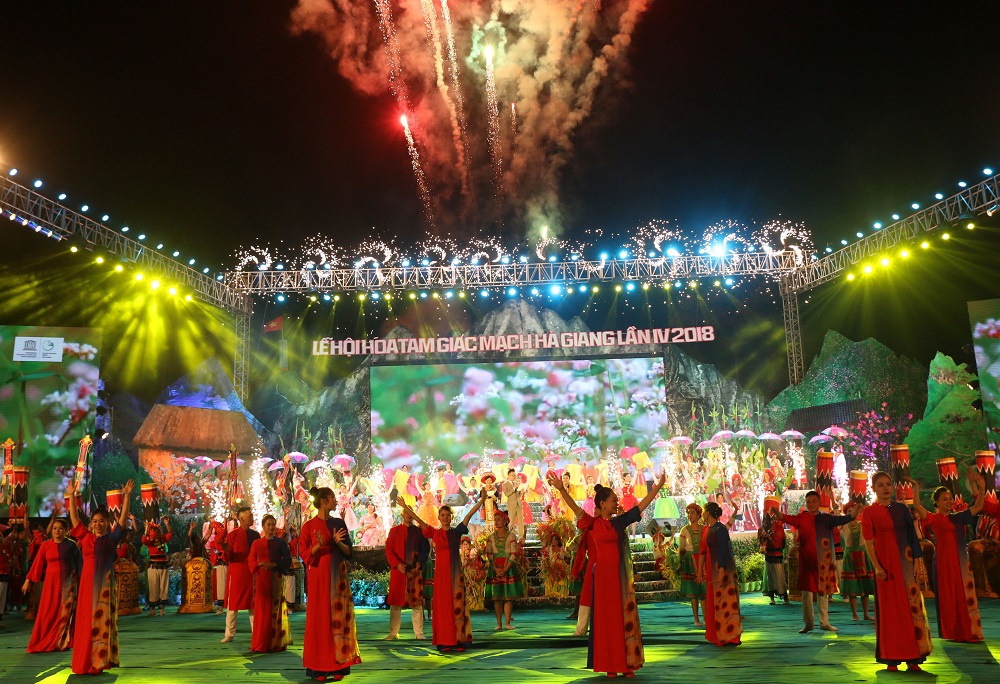
History & meaning.
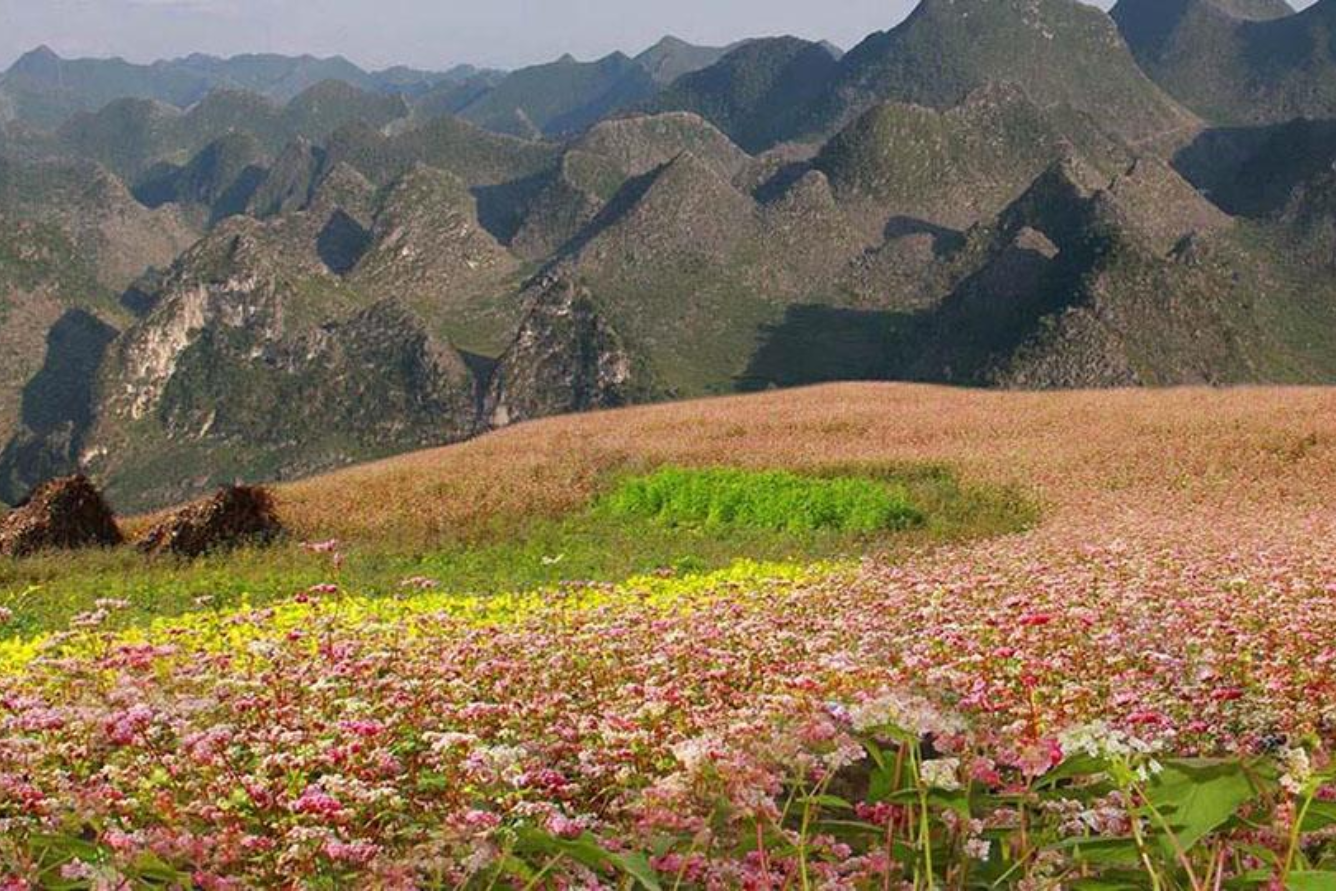
The Dong Van Karst Plateau is a UNESCO Geological Heritage site recognised in 2010 — one of the world's oldest and most spectacular limestone plateaus, formed 400–600 million years ago. On this vertical, fractured, and harsh limestone terrain, H'Mong communities found a way to cultivate food by chiselling holes in the rock, filling them with earth, and planting maize, beans, and buckwheat. This is not farming — it is the will to survive. Buckwheat blooms in October–November after the rainy season ends and before the coldest winter arrives — a brief window of approximately 4–6 weeks during which the entire karst plateau shifts colour from grey to pale pink and white.
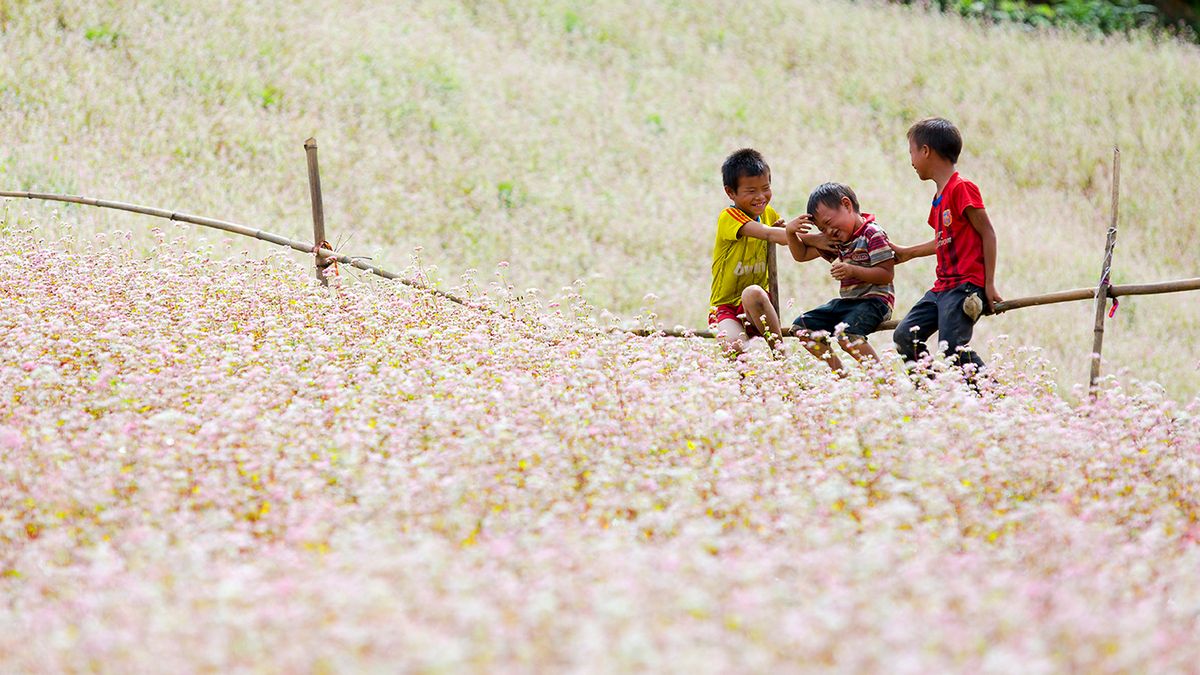
Beyond the visual spectacle, the Buckwheat Flower Festival is an opportunity to understand the H'Mong food culture tied to this crop. Buckwheat cake — made from roasted buckwheat flour mixed with honey and sugar, shaped into small rounds — is the only H'Mong cake that is not sweet in the conventional sense: it is nutty, slightly bitter, with a distinctive grain aroma. Dong Van corn wine (actually fermented from a blend of maize and buckwheat) is the region's traditional spirit — clear, high-strength, drunk from small earthen cups according to local custom. During festival days, stalls selling cakes and wine crowd densely along Dong Van Ancient Quarter — one of the most beautiful Chinese merchant quarter streetscapes in northern Vietnam's highlands.
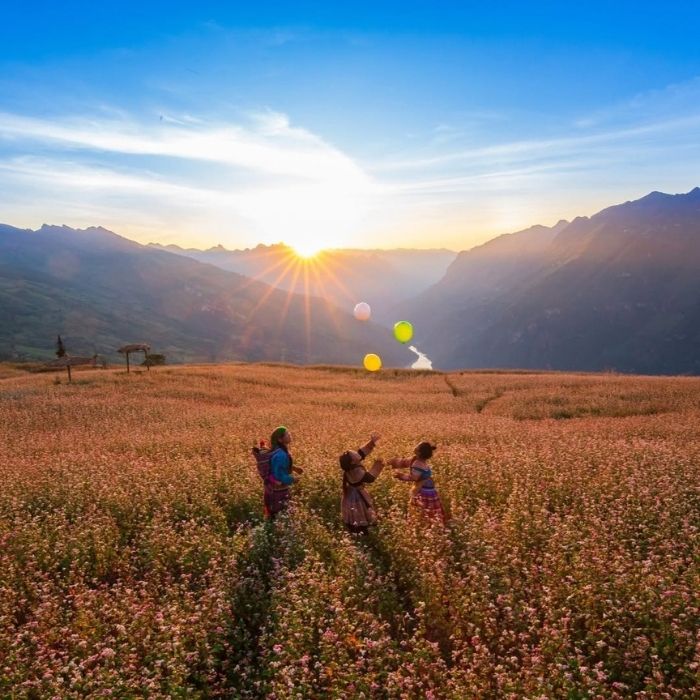
The official festival programme organised by Ha Giang province includes ethnic cultural performances, competitions, and interactive activities between visitors and local people. But many who have come to Ha Giang during buckwheat season say the official programme is not the most memorable element. The most memorable element is the morning when you wake before sunrise, climb an unnamed mountain road, and stand alone in the mist of a 1,500-metre plateau watching the first light fall across a sea of pale pink flowers stretching to a horizon of stone. This is a moment that appears in no official programme, that no guide can lead you to, and that cannot be adequately captured by photography.
The buckwheat flowering season lasts approximately 4–6 weeks but is not simultaneous — at different elevations, flowers bloom at different times. Quan Ba district (lower altitude, around 1,000–1,200m) typically blooms earliest, around late September. Dong Van and Meo Vac (higher, 1,400–1,600m) bloom later, usually mid-to-late October. If possible, stay in Ha Giang for at least 4–5 days to move through elevations from lower to higher and catch flowers at multiple points. Meo Vac — the farthest and least visited district — typically has the most beautiful flower fields because they are least affected by visitor volumes.
No soil — we plant on stone. Stone resists — the flowers bloom anyway.
Câu nói dân gian H'Mông về cây tam giác mạch
Highlights not to miss.
The geographical foundation of the flower festival is the Dong Van Karst Plateau, recognised by UNESCO as a Global Geopark in 2010. This is one of the world's oldest and least eroded limestone plateaus — vertical karst terrain, deep gorges, and sharp rock peaks create the visual backdrop for the flower season. Nowhere else in the world has flowers blooming across this type of terrain at the scale seen in Dong Van.
Buckwheat is a food crop, not a decorative flower — and festival season is the best time to try food made from this plant. Buckwheat cake has a nutty, slightly bitter flavour unlike any other Vietnamese cake. Dong Van corn wine, fermented from a corn-buckwheat blend, is the most representative traditional spirit of the Ha Giang highlands — clear, distinctively aromatic, approximately 40–45% alcohol. Both are best purchased directly from local residents.
Dong Van Ancient Quarter — a cluster of late-19th- to early-20th-century Chinese and H'Mong merchant architecture — becomes the social hub of the festival. During peak flower days, the ancient quarter fills with people descending from distant villages, with periodic markets selling handicrafts, hemp fabric, and local products. This is a space that combines architectural beauty, street food, and the distinctive multi-ethnic social atmosphere characteristic of Ha Giang.
The official festival is held on weekends — this is when visitor numbers are highest and the well-known flower viewpoints will be packed. Visiting on Tuesday or Wednesday during festival week gives far quieter scenes with equally beautiful flowers. Less-known tip: Pho La village (Dong Van district) and the area around Sam Pun Pass (Meo Vac–Lung Cu) typically have excellent flower views with significantly fewer visitors than the popular spots.
How to attend & get there.
Timing and Itinerary
The most beautiful buckwheat flowering period is usually mid-October to early November — but this varies with each year's weather. Monitor Ha Giang travel forums or the Ha Giang Department of Tourism's Facebook page for real-time flower status before booking. Stay at least 3–4 days to have adequate time for Dong Van, Meo Vac, and Yen Minh districts.
Moving Across the Karst Plateau
Renting a motorbike is the most flexible way to travel on the karst plateau — but the Ma Pi Leng Pass and many steep road sections genuinely require mountain-road riding experience. If unfamiliar with high-altitude terrain, hire a local xe ôm driver or taxi. Do not ride the Ma Pi Leng Pass in rain or heavy fog — wet roads and poor visibility present real danger.
Sources
- 1.Lễ hội Hoa Tam Giác Mạch — Sở Du lịch Hà Giang
Sở Du lịch tỉnh Hà Giang · 2026-06-21
- 2.Lễ hội Hoa Tam Giác Mạch Hà Giang
Tổng cục Du lịch Việt Nam · 2026-06-21
- 3.Dong Van Karst Plateau — Buckwheat Flower Season
Dong Van Geopark · 2026-06-21