History & meaning.
The khèn Mông is a more complex instrument than it appears. Six bamboo tubes of varying lengths are fitted tightly into a wooden gourd — usually pơ mu cedar or mountain pine — and each tube has a thin metal reed that controls the pitch. The player does not simply blow into the gourd but simultaneously blows and inhales — a continuous circular breathing technique comparable to the Australian Aboriginal didgeridoo. This produces unbroken sound even while the player breathes. Learning the basic technique takes at least a year; mastering it sufficiently to perform at funerals — the most sacred role — typically takes a decade. This is precisely why UNESCO is concerned: without students, there will be no more masters.
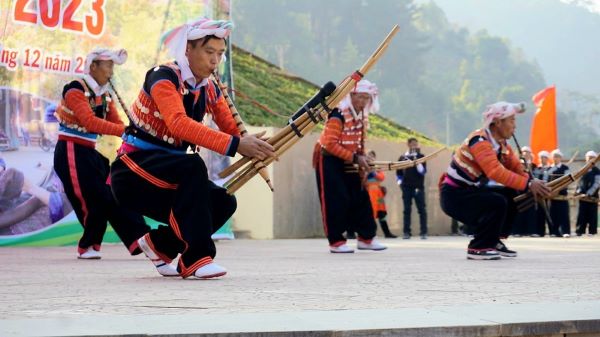
The reed pipe competition in the Khèn Mông Festival resembles no other music competition in Vietnam. Participants perform on open mountain slopes, without a fixed stage — the natural terrain is part of the performance. A panel of elderly master musicians evaluates three elements: musical technique (accuracy of melody and rhythm in traditional khèn pieces), dance quality (the standard of spinning, jumping, and bending movements), and their integration (both elements must be perfectly synchronised — one cannot play beautifully while dancing poorly). The highest score goes not to the most technically precise player but to the one who plays most beautifully while jumping highest — an artistic standard that demands physical fitness, musical sensitivity, and years of dedicated practice.
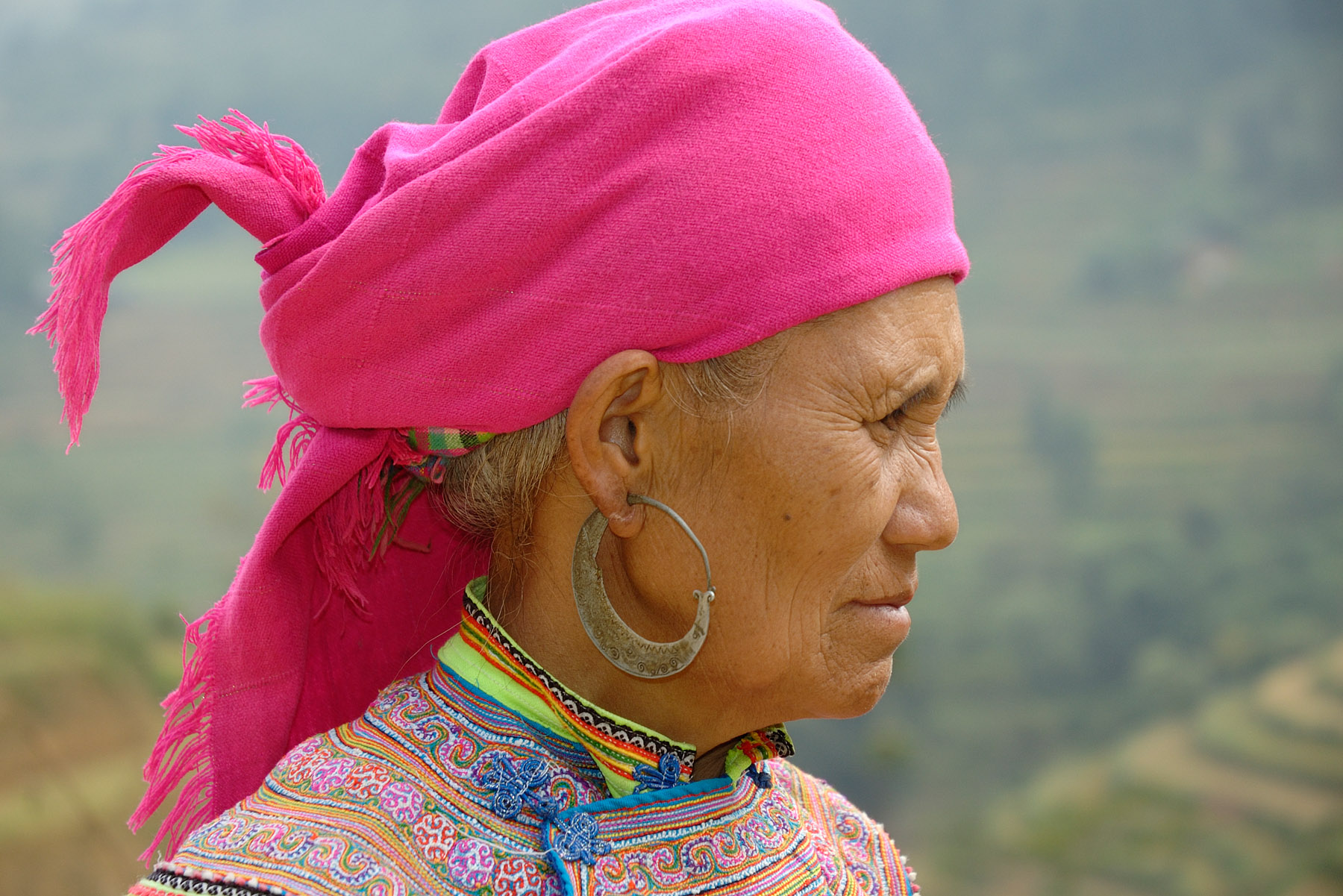
Beyond the competition, the Khèn Mông Festival is the most important social gathering of the year for H'Mong communities in Dong Van and Meo Vac. H'Mong women's hand-embroidered costumes — each taking three to six months to complete — are worn for this occasion. Embroidery colours and patterns differ by H'Mong sub-group: Flower H'Mong wear complex geometric designs in red and blue, Black H'Mong wear dark colours with silver decoration, White H'Mong favour white and silver. A periodic market is set up beside the festival area, selling hemp fabric, silver jewellery, leaf tobacco, and corn wine — a genuine market, not a tourist bazaar.
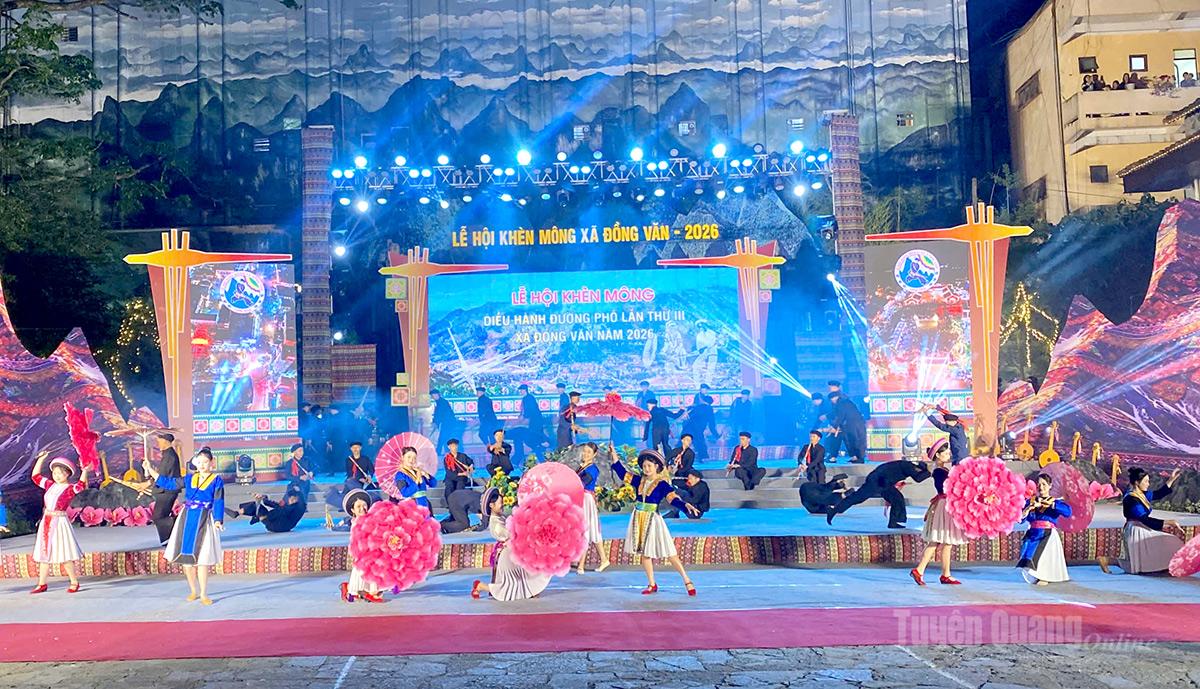
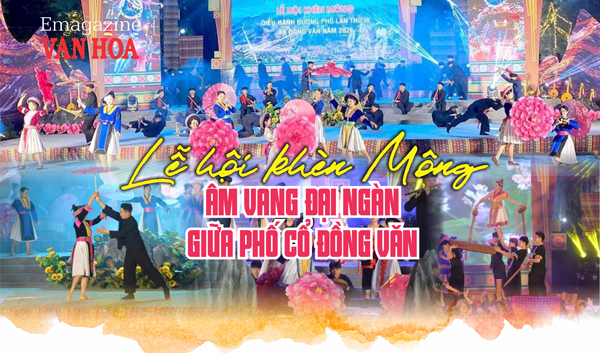
Witnessing the Khèn Mông Festival in person is difficult to convey in words because it engages multiple senses simultaneously against a backdrop that exists nowhere else on earth. Reed pipe sound rises through morning mist on the plateau — a sustained, simultaneously joyful and melancholic tone that spreads on the wind across vertical limestone karst walls. The scent of mountain peach blossoms and burning wood from roadside stalls blends into the cold air. The vivid colours of H'Mong dress contrast sharply against grey stone and white mist. When a performer enters acrobatic dance while the reed pipe sounds without interruption, the audience — H'Mong and outsiders alike — falls still and silent, watching with a quality of attention that is rarely encountered.
The khèn is the voice of the heart — those who cannot play it cannot say what they truly mean.
Câu nói truyền khẩu của người H'Mông vùng Đồng Văn
Highlights not to miss.
The khèn Mông was placed on UNESCO's List of Intangible Cultural Heritage in Need of Urgent Safeguarding in 2015 — one of the very few musical instruments to receive this specific attention globally. The risk comes not from a decline in the H'Mong population but from a shortage of learners: mastering the khèn requires years of dedicated study, while younger generations are orienting toward urban professions. The Khèn Mông Festival is one of the most vital conservation efforts because it creates a social market for khèn skill — the best player remains the most respected and admired member of the community.
Few outside the H'Mong community know that this joyful spring competition originates from an instrument with a core funerary function. When an H'Mong person dies, a khèn master is called and plays continuously throughout three days of mourning — the music guides the deceased's soul away from malevolent forces and toward the ancestral world. This is why the H'Mong regard the khèn as a sacred object, not a toy, and why learning it carries community responsibility rather than personal preference.
H'Mong khèn performance is a unique combination of music and acrobatic dance found in no other ethnic group in Vietnam. The player must simultaneously maintain continuous sound (through circular breathing technique) while performing physically demanding movements: 360-degree spins, high jumps, backward bending, climbing poles or rocks. Judges evaluate both elements at once. The best khèn performers typically begin training at age 8–10 and practise daily — their physical condition is comparable to that of a young athlete.
You do not need to learn to play the khèn — but if you know the names of a few traditional khèn pieces such as 'khèn đám ma' (funeral piece) or 'khèn tán gái' (courtship piece) and can ask about them with genuine curiosity, H'Mong people will open up significantly more. Real interest in their culture — not just photography — is the key to being invited into conversations that are genuinely meaningful.
How to attend & get there.
Getting to Dong Van During Festival Season
From Ha Giang city to Dong Van is approximately 150km via the Ma Pi Leng Pass — a spectacular but demanding route requiring at least 4 hours of driving. Depart Ha Giang city early (5:00–6:00 AM) to arrive in Dong Van by mid-morning and have the full afternoon for the festival. January–February temperatures on the karst plateau can drop below 5°C at night — bring sufficient warm clothing.
Respecting the Festival Space
Do not push into the competition area during performances — the H'Mong reserve the central space for community members. Do not touch another person's khèn uninvited — it is a sacred object. If you wish to buy a khèn as a souvenir, purchase directly from an artisan rather than from a tourist shop — the quality and meaning are entirely different.
Sources
- 1.Khèn Mông — Di sản văn hóa phi vật thể cần bảo vệ khẩn cấp
Báo Văn Hóa · 2026-06-21
- 2.Khen Mong of the Mong people — UNESCO Intangible Cultural Heritage
UNESCO · 2026-06-21
- 3.Lễ hội Khèn Mông Hà Giang
Tổng cục Du lịch Việt Nam · 2026-06-21