History & meaning.
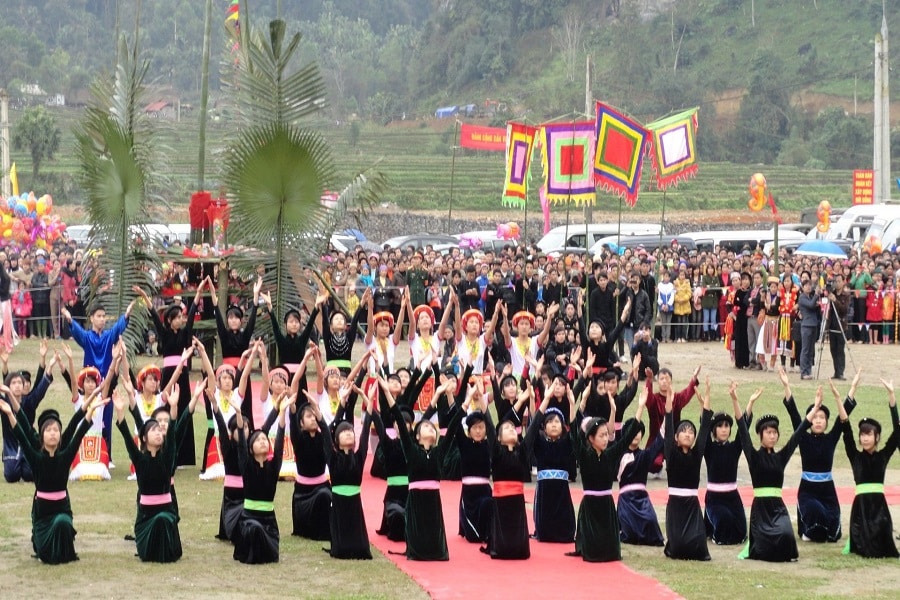
The Lồng Tồng Festival is the clearest demonstration of the cultural differences between ethnic groups living in two distinct terrains within the same province. While the H'Mong on the Dong Van karst plateau have festivals tied to reed pipe music, horse racing, and expansive open spaces, the Tay and Nung in the valleys below have Lồng Tồng — a festival of wet rice land, of enclosed village communities, and of a deep relationship with cultivated soil. Ha Giang's valleys — especially areas like Bac Quang, Vi Xuyen, and Bac Me — have a more humid climate and more fertile alluvial soil than the karst plateau, suited to wet rice cultivation and the sedentary agricultural culture of the Tay-Nung.
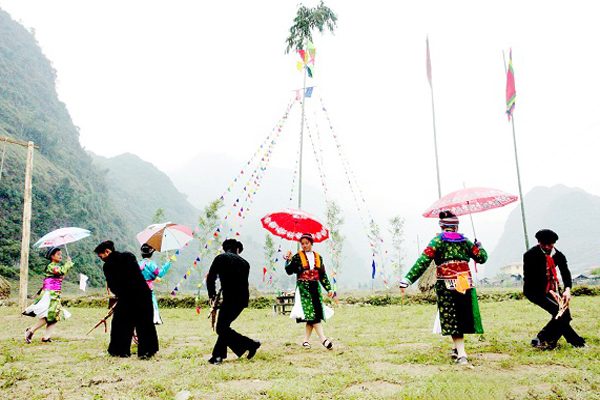
The ném còn game — the most joyful highlight of Lồng Tồng — carries spiritual significance beneath its playful surface. The còn pole, 15–20 metres high, is erected in the centre of the open area, with a bamboo or red paper hoop approximately 40–50cm in diameter at the top. The còn ball is an embroidered cloth bag with colourful tassels attached. Players attempt to throw the ball through the hoop from a significant distance — not an easy task, requiring both strength and precision. By tradition, throwing the ball through the hoop is considered an auspicious sign for the entire community in the coming year — the sooner the hoop is broken, the better the harvest.
Then singing during Ha Giang's Lồng Tồng Festival is the most authentic musical experience a visitor can have with this spiritual genre. Then is a form of music that combines singing, poetry, and spiritual ritual of the Tay, Nung, and Thai peoples — inscribed by UNESCO on the Representative List of Intangible Cultural Heritage of Humanity in 2019. Then singers (then bà or then artisans) simultaneously sing and play the đàn tính (a three-string instrument made from lightweight wood with silk strings), producing a characteristically sustained and resonant sound. In Lồng Tồng, the finest then pieces praise heaven and earth, pray for rain, and remind the community of its obligations to the ancestors.
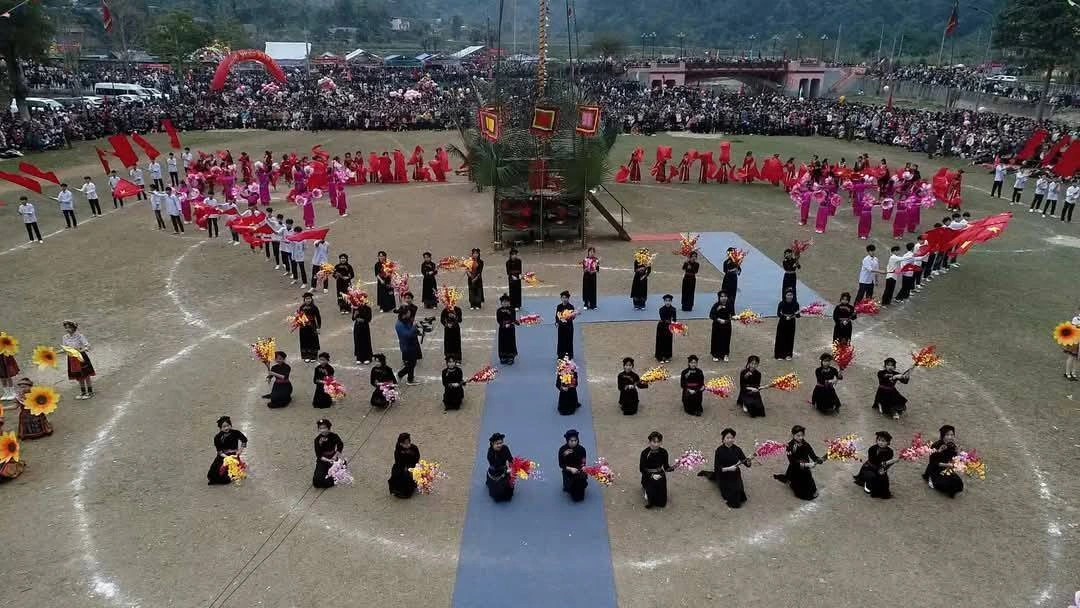
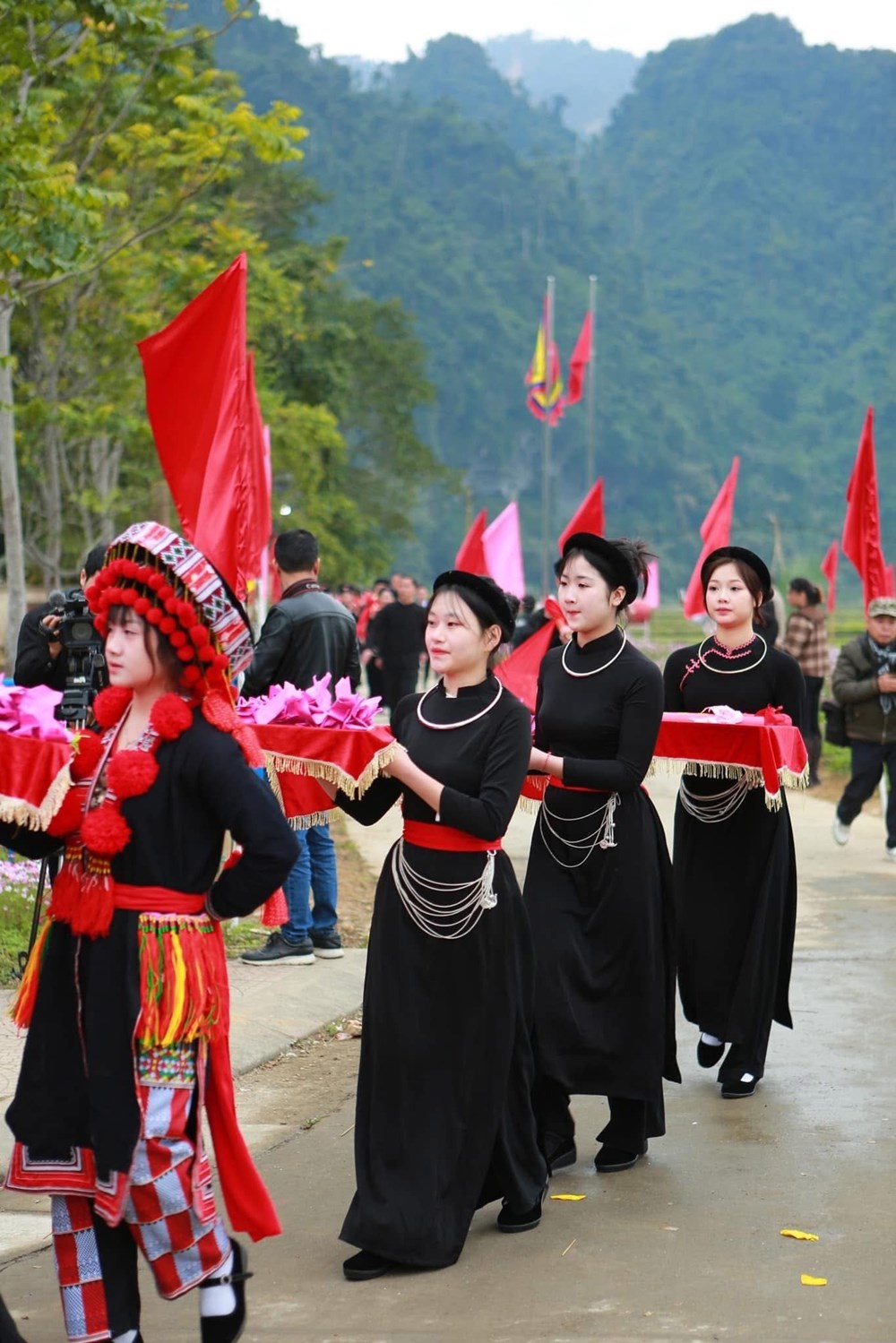
The atmosphere of Lồng Tồng in Ha Giang has a quality that few Vietnamese festivals can match: intimacy and authenticity in the way of a valley agricultural community. The smell of ceremony incense mingles with the damp earth scent of the field after its resting season. The sound of the đàn tính rises through the green valley surrounded by mountains. Dark indigo clothing of Tay women contrasts with the pale green of newly sprouted rice seedlings. Children in their best clothes run around the còn pole waiting for the game to begin. And when the first furrow is completed, the communal shout that rises is not the cheer of an audience watching a performance, but the joy of farmers who have just been given permission to begin the work of a new year.
The earth waits for us a whole year — we must go and address it before we begin.
Lời của già làng Tày ở Vị Xuyên, Hà Giang
Highlights not to miss.
The first ploughing in Lồng Tồng is not merely a symbolic gesture — it is the genuine starting signal for the entire farming season. After the village chief completes the ceremonial furrow, households in the village begin ploughing their own fields in the following days. This is how the community synchronises its agricultural calendar — no one ploughs before Lồng Tồng, and after Lồng Tồng, the entire village works together. This communal coordination is one of the reasons Tay-Nung agricultural culture has such strong social cohesion.
Then was recognised by UNESCO in 2019, but the best place to hear it is not a concert stage but Lồng Tồng in a small Tay village. In a genuine ceremonial context, the then singer does not perform for an audience but sings to communicate with the spirits — the musical quality and concentration are entirely different. Visitors fortunate enough to witness a then singing competition in Lồng Tồng are accessing intangible cultural heritage in a way that no staged arts programme can replicate.
Ném còn is the most characteristic game of Tay-Nung culture in northern Vietnam and southern China, but in Ha Giang's Lồng Tồng it carries an additional spiritual dimension: the first ball to break through the hoop is an auspicious sign for the entire year. Alongside ném còn, shuttlecock (folk badminton), tug-of-war, and occasionally local horse racing create a genuinely athletic festival day. There are no cash prizes — the winner receives the community's respect and sincere congratulations.
Many Tay villages in Bac Quang and Vi Xuyen districts have traditional homestays in wooden stilt houses. Staying overnight before Lồng Tồng allows you to wake with the host family, follow them to the field in the early morning, and witness the preparation atmosphere from the inside — an experience entirely different from arriving from outside on the day itself.
How to attend & get there.
Where to Find Lồng Tồng in Ha Giang
Lồng Tồng takes place in many Tay-Nung villages across Ha Giang — there is no single central venue. Bac Quang, Vi Xuyen, and Bac Me districts have large Tay-Nung communities and observe Lồng Tồng according to full tradition. Contact the Ha Giang Department of Tourism or Tay-run homestays before the festival period (1st–2nd lunar month) to get the correct location and timing.
Participate, Don't Just Watch
Ask if you can try ném còn — visitors are often invited to join after the official competition round. This is the fastest way to break the ice with the local community. Bringing something to contribute to the post-ceremony communal meal — fruit, cake, or simply being willing to sit down and eat together — is almost always warmly received.
Sources
- 1.Lễ hội Lồng Tồng — nét văn hóa đặc sắc của đồng bào Tày–Nùng
Báo Dân tộc và Phát triển · 2026-06-21
- 2.Then singing of the Tay, Nung and Thai peoples — UNESCO
UNESCO · 2026-06-21
- 3.Lễ hội Lồng Tồng Hà Giang
Tổng cục Du lịch Việt Nam · 2026-06-21