History & story.
The Sa Huynh culture was first discovered in 1909 when French geologist M. Vinet found ceramic burial jars containing human remains in the coastal sand dunes of Long Thanh hamlet, Pho Thanh commune, Duc Pho. It is one of Vietnam's three major prehistoric cultures alongside Dong Son in the north and Oc Eo in the south. Sa Huynh culture is dated from approximately the 2nd century BCE to the 2nd century CE — roughly 2,000 years ago — and spread across a territory from Quang Binh south to Binh Thuan, with evidence found on nearshore islands as well. The Sa Huynh people's defining burial practice was jar burial — interring the deceased inside large ceramic vessels — a custom entirely distinct from the practices of contemporary civilisations in the region.
Excavations since 1909 have uncovered thousands of burial jars at multiple sites along the Quang Ngai coastline and neighbouring provinces. Inside the jars, beyond the human remains, archaeologists have found brilliantly coloured glass jewellery, carnelian and quartz beads, zoomorphic ear ornaments and double-headed animal ear pendants carved from nephrite, along with finely wrought iron tools and ceramics. Most significantly, glass and stone ornaments have been traced to origins in India, China, and even the Malay Peninsula — clear evidence that Sa Huynh people participated in the vast maritime trade networks of their era. Many artefacts are internationally recognised as critical to understanding prehistoric civilisational exchange in Southeast Asia.
Sa Huynh Museum in Duc Pho houses the most concentrated collection of artefacts from this culture. Thematic galleries include: a burial space (reconstructing an intact jar burial), ceramics (over 200 specimen jars, vases, and pots with characteristic motifs), jewellery (Vietnam's richest collection of stone ear ornaments and bracelets), and iron tools (axes, blades, and spears demonstrating sophisticated metallurgy). At the adjacent Long Thanh sand dunes, visitors can see the original excavation site and observe cultural strata cut through in archaeological trenches.
Today Sa Huynh is recognised as a National Cultural Heritage site and one of the most significant archaeological locations in Southeast Asia. International archaeological teams from Japan, France, Australia, and the United States have collaborated on excavations and research here. Duc Pho town is developing cultural tourism around the Sa Huynh legacy — combining museum visits, the excavation sand dunes, and the adjacent Sa Huynh fishing village with its beautiful beach. This is an ideal destination for visitors drawn to deep history rather than merely searching for a photogenic backdrop.
Sa Huynh burial jars are not merely objects — they are time portals. Each jar is a story about a person who lived, loved, and believed in rebirth.
TS. Đoàn Ngọc Khôi, Bảo tàng Quảng Ngãi, 2020
Highlights not to miss.
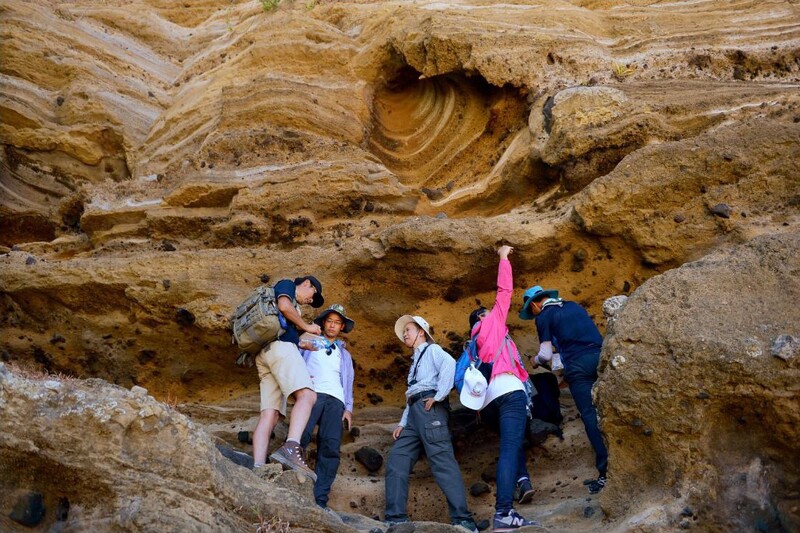
Long Thanh sand dunes — where the Sa Huynh culture was first identified — are still being partially excavated and are open to visitor access. Archaeological trenches cut through the dunes reveal stacked cultural strata, each layer separated by centuries. This is a rare opportunity to watch archaeology in progress.
Sa Huynh Museum holds Vietnam's most extraordinary collection of stone ear ornaments — C-shaped lingling-o pieces and double-headed animal pendants crafted from nephrite and precious stones. Archaeologists identify these as important social-stratification markers within Sa Huynh communities: higher-status individuals wore larger ornaments made from finer stones. Some identical ornament types have been found in the Philippines, Taiwan, and other Southeast Asian islands — evidence of a transoceanic exchange network thousands of years old.
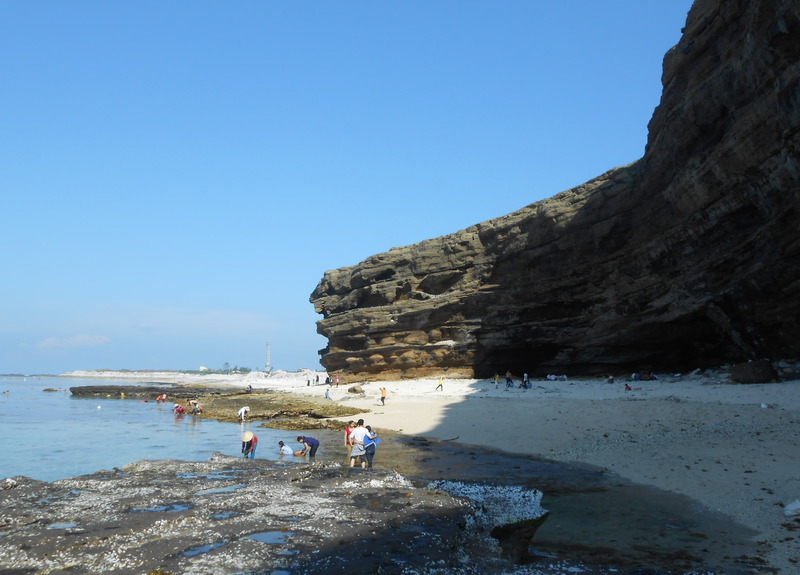
Directly beside the archaeological site lies Sa Huynh fishing village and An Khe Lagoon — a quiet coastal bay enclosed by sand hills, where fishing boats and sampans rest in calm water. The landscape evokes what the ancient Sa Huynh people saw every morning — a fertile coastal lagoon teeming with fish and shellfish. Sa Huynh's golden sand beach with its gentle surf makes a perfect complement to a museum visit.
After visiting the museum and excavation site in the morning, Sa Huynh beach is just minutes away on foot — one of Quang Ngai's quietest and least crowded beaches, with golden sand and clear water. The nearby An Khe Lagoon is equally beautiful in the afternoon light.
How to visit & get there.
Visiting the Museum Sa Huynh Museum in Duc Pho is the ideal starting point — **allow 60–90 minutes** to take in all the galleries before heading to the sand dunes. **Hire a museum guide** (~100,000 VND) as many artefacts lack complete English annotations. Photography is permitted inside without flash.
Getting There from Quang Ngai Duc Pho town is about **65 km south of Quang Ngai city** via National Highway 1A. **Trains** (Duc Pho station on the North–South line) or **coaches** from Quang Ngai bus station both serve the town. From central Duc Pho the site is another 5 km — hire a local xe ôm (motorbike taxi) or taxi.
Sources
- 1.Văn hóa Sa Huỳnh: Di sản khảo cổ quý giá Việt Nam
Tạp chí Tổ Quốc · 2026-06-26
- 2.Di chỉ khảo cổ Sa Huỳnh Quảng Ngãi
VietnamPlus · 2026-06-26